Getting Started
How Long It Actually Takes to Get Comfortable With Watercolor
A realistic answer to how long it takes to learn watercolor painting, the phases beginners pass through, and which practice habits move the needle.
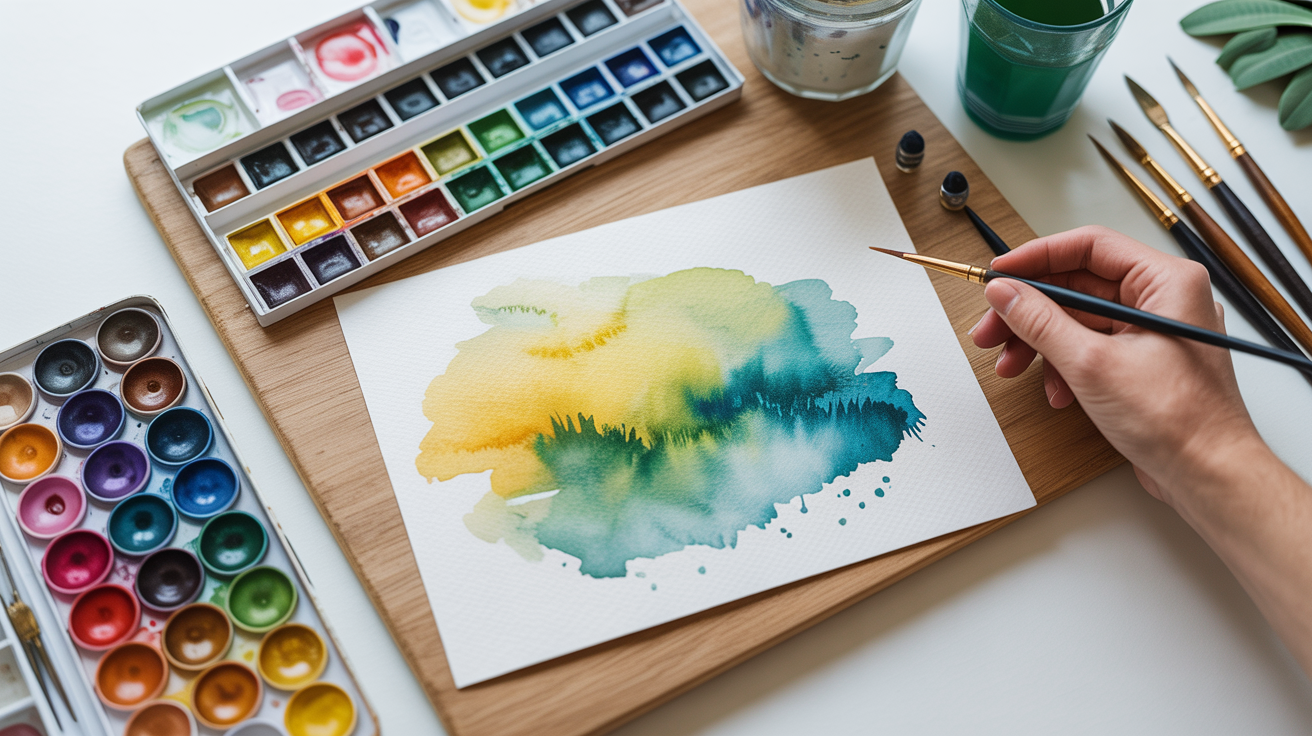
If you have been at this for three or four weeks and your washes still look muddy and your brush still feels like it has a mind of its own, you are not behind. You are exactly on schedule. The honest answer to how long it takes to learn watercolor painting is not a number of weeks or months. It is a number of hours spent mixing paint and moving a loaded brush across wet paper, and that number is different for everyone because the hours themselves are different for everyone.
Calendar time only matters in that it gives you the chance to log hours. Two people who both "started four months ago" can be in very different places if one painted twenty minutes twice a week and the other sat down for an hour most evenings. The clock is not what teaches your hand to control water. Repetition is.
Why Progress Doesn't Track the Calendar
Watercolor is a wet medium with a short window to make decisions before the paper dries and the moment for blending or lifting closes. That kind of split-second judgment, how wet is too wet, how much pigment is enough, when to leave a passage alone, only comes from having made the mistake enough times that your hand starts anticipating it. Reading about it helps you understand what should happen. It does not build the reflex.
This is why two beginners with the same number of "months in" can be at very different points. Someone who paints small, fast studies most days racks up decision-making reps quickly; someone who paints one ambitious piece a month gets fewer reps even if the session runs long. Comparing your progress to someone else's without knowing their practice volume is a good way to feel discouraged for no reason.
The Three Phases Most Beginners Move Through
Nobody moves through these in a straight line, and no fixed number of paintings flips you from one to the next. Most people recognize the shape of it in hindsight, though.
Phase One: Fighting the Brush
This is where the paint feels like it is doing things to you instead of the other way around. Washes come out blotchy, colors dry three shades lighter than expected, water pools in the wrong places, and edges harden before you meant them to. It is frustrating because you can see, in your head, what you wanted, and the gap between that and the puddle on your paper feels enormous. This phase is almost entirely about building basic water control, and it is worth spending it on small, low-stakes exercises rather than ambitious paintings. If you have not already, starting watercolor in a single afternoon covers the fundamentals that trip up almost everyone here, and a look at common beginner mistakes can save you weeks of repeating the same ones.
Phase Two: Washes Start Behaving
At some point, without a clear line you can point to, wet-in-wet washes stop being a gamble. You start knowing, before you touch the paper, roughly how it will dry. You can lay a flat wash without visible streaks most of the time, and when a wash does go wrong you usually know why, which is a more useful skill than just being frustrated. This phase is where a lot of the earlier discouragement fades, because you finally have evidence that the hours are adding up to something.
Phase Three: Mixing Becomes Intuitive
Later still, color mixing stops being a lookup problem. Early on, getting a specific green or a natural grey means trial and error, or checking a mixing chart. Eventually you develop a feel for what your pigments will do together, and you mix toward a color you are picturing rather than stumbling into it. This is also usually when your value judgments sharpen, so a painting reads as having real light in it instead of just being wet paint on paper.
None of these phases arrive on a schedule. Someone painting an hour most days might move through Phase One in a couple of months. Someone painting twenty minutes once a week might spend the better part of a year there, and that is not a sign of low talent. It is a straightforward function of practice volume.
What Your Practice Habits Actually Buy You
There is no formula that converts hours into skill, but the pattern below holds up across most beginners. Treat it as tendencies, not promises.
| Practice pattern | What it tends to produce |
|---|---|
| Daily, 15 to 30 minutes | Fast build of water and brush control; frustration phase is usually shorter because reps compound quickly |
| A few times a week, 30 to 60 minutes | Steady, reliable progress; most beginners who stick with this land in Phase Two within a few months |
| Weekly, one longer session | Slower overall progress, but often stronger single paintings since there is time to plan and finish |
| Occasional, no fixed rhythm | Progress is real but uneven; skills can feel like they reset a little between sessions since gaps let habits fade |
If your schedule only allows short sessions, that is genuinely fine. Short, frequent practice is an efficient pattern for building core water-and-paint reflexes, precisely because you are making many small decisions in a short window instead of a few decisions in a long one. If fifteen minutes is what you have, a short-session practice routine is built exactly for that constraint.
Plateaus Are Normal, Not a Sign You've Stalled
At some point, usually after the first rush of visible improvement, progress seems to flatten out. You are not getting worse, but you are not obviously better week to week either. This is a plateau, and almost everyone hits one.
Plateaus usually mean one of two things. Either you have gotten comfortable with your current level of difficulty and stopped pushing it, which is easy to do without noticing, or you have hit a specific skill gap, maybe values, maybe edge control, maybe color mixing, that repeating the same kind of painting will not fix on its own.
The way through is usually to change one variable on purpose. Paint a subject you have been avoiding. Work larger or smaller than usual. Try a limited palette of two or three colors, which forces new mixing decisions. None of these require starting over, they just interrupt the routine that got you into the plateau. And if the plateau is really a confidence problem, that is worth naming too. A lot of "I'm not improving" is closer to "I'm scared to try the thing that would show me I've improved." If sitting down to paint has started to feel harder than it used to, getting over the fear of a blank page is a good place to start.
Signs You're Actually Improving, Even If It Doesn't Feel Like It
Progress rarely feels dramatic from the inside because you are comparing today's painting to yesterday's, not to where you started. A few signs to look for instead: you mix colors with fewer attempts, you notice problems in a wash while it is still wet instead of after it dries, you leave more white paper alone instead of feeling like every inch needs paint, and older paintings you kept look rougher now than they did at the time. That last one is a reliable marker. If your old work looks worse in hindsight, your eye has improved even if your hand hasn't caught up yet.
Frequently Asked Questions
How many paintings does it take to get good at watercolor?
There is no fixed count, because "good" is a moving target and painting size, complexity, and how deliberately you practice all matter more than a raw tally. As a rough pattern, beginners who paint small, focused studies rather than only finished pieces tend to notice real control improvements within roughly fifty to a hundred sessions, but treat that as a loose tendency, not a target.
Is it normal to feel like I'm getting worse before I get better?
Yes. As your eye improves, you start noticing flaws you did not see before, so your own paintings can start to look worse to you even though your technique is improving. That mismatch between a sharpening eye and a hand still catching up is one of the more discouraging parts of the early stages, and it usually resolves on its own as your hand closes the gap.
Do I need to paint every day to improve?
No. Daily practice tends to build core water control faster because the reps are more frequent, but consistent practice a few times a week produces steady progress too. What matters more than frequency is whether each session involves actually making decisions rather than just following a tutorial step by step without thinking about why.
Why do my washes still look uneven after months of practice?
Uneven washes are almost always about water ratio, timing, or paper angle rather than a mixing problem, and they are slow to fully iron out because several small variables affect them at once. Check whether your paper is tilted enough to let water flow evenly, whether you are working the wash while it is still uniformly wet rather than going back into a half-dry patch, and whether your brush carries a consistent amount of water stroke to stroke.
At what point should I stop following tutorials and start painting on my own?
There is no single point, but a reasonable signal is when you find yourself predicting what a tutorial will say before it says it. At that point, following along gives you less than deciding for yourself would, and painting from your own reference or imagination, even imperfectly, builds judgment a tutorial can only describe secondhand.