Getting Started
Getting Over the Fear of the Blank White Page
Afraid to start your watercolor painting? Here's how to move past blank page anxiety and perfectionism so you can actually put paint on paper.
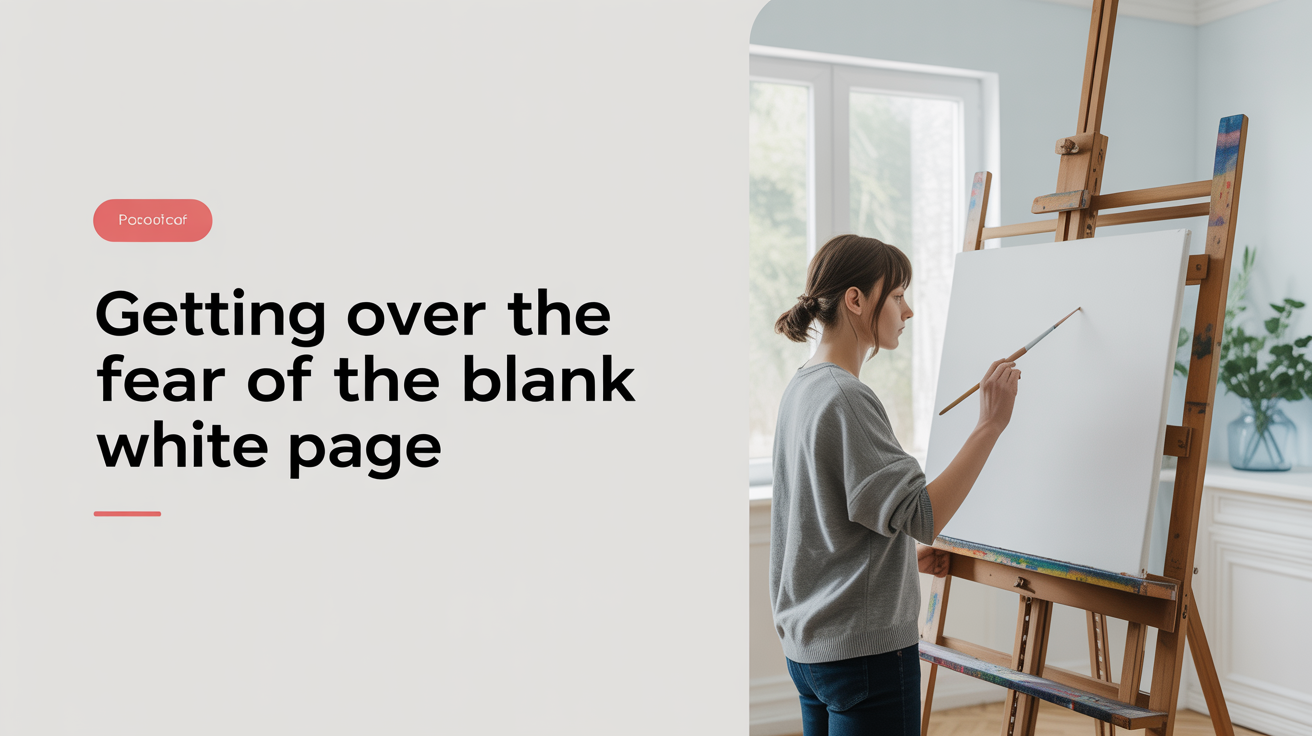
You load your brush. You look at the paper. And then you sit there.
The white page has a way of making every idea feel too risky to try. What if the wash bleeds wrong? What if the colors go muddy? What if the whole thing looks like a mistake? That fear of starting a painting is one of the most common things beginners talk about, and it keeps a lot of people from ever getting past the "planning" phase.
The good news: the fear is not about skill. It's about the way you're thinking about that paper. Change how you see it, and the paralysis tends to lift quickly.
Why Watercolor Feels Riskier Than Other Media
With pencil you can erase. With acrylic you can paint over. But watercolor on dry paper has a sense of permanence, and beginners often treat each sheet like a signed contract they can't back out of.
Part of this is the paper itself. A blank white sheet of 100% cotton watercolor paper is genuinely expensive, and that price tag makes mistakes feel costly. Part of it is the medium: watercolor moves in ways you can't fully predict, so beginners assume that any unplanned bloom or backrun is a failure.
Here's the correction: experienced watercolor painters don't avoid accidents. They work with them. The loose, luminous quality that makes watercolor beautiful comes directly from letting the paint do things you didn't completely plan. Perfectionism watercolor is almost a contradiction in terms.
The Paper Is Not a Trophy
One shift that helps immediately: stop treating your paper as a finished object before you've touched it. A blank sheet is not something to protect. It's a starting surface, and its job is to get paint on it.
Practical ways to reinforce this:
- Use cheap paper for warm-ups. Keep a pad of student-grade paper at your desk and use it for the first five minutes of every session. Mix a color, lay a flat wash, do something purposeless. By the time you reach for your good paper, your hand is already moving.
- Cut your good paper in half. A half sheet feels less precious than a full one. You can always tape two halves into a composition later if a piece grows.
- Date the back, not the front. Write the date on the back of each sheet before you start. It turns the paper into a record of a session, not a shot at perfection.
- Keep a "wreck pile." One stack of finished paintings you don't care about. When blank page anxiety hits, pull one out and paint on top of it. The worst outcome is that it still looks bad.
Set Up the Scene Before You Touch Paper
A lot of blank page anxiety art has nothing to do with the paper itself. It comes from sitting down without a clear plan and then staring into the void while your water cools.
Before you put a single drop of water on your brush, spend two minutes deciding three things:
- What shape or subject am I painting? Even a loose reference, a photo on your phone, a lemon in a bowl, a view out the window, gives your eye somewhere to go.
- What's my lightest light? In watercolor, white is the paper. Decide where you're saving it before you start, even just roughly.
- What color goes on first? Lay the lightest wash first and work toward darks. Having a sequence removes the hesitation about where to begin.
If you're not sure what to paint, work through watercolor for absolute beginners: how to start in one afternoon for a simple subject that takes all the decision-making off your plate.
The First Mark Doesn't Have to Be in the Right Place
Here's one way to break through blank page anxiety directly: make the first mark somewhere unimportant.
Start with a light pencil sketch in the corner. Lay a test wash along one edge. Wet the paper and drop in a background color before you've drawn anything at all. The idea is to break the surface tension, literally and psychologically. Once there's something on the paper, you're no longer protecting a blank sheet. You're working on a painting.
Some painters do a loose wet wash over the entire paper first, just a thin glaze of warm or cool color, before drawing or planning anything. The paper is no longer white, so there's nothing left to fear losing.
The 5 things you actually need for your first watercolor painting covers the basic setup that makes those first marks easier to land confidently.
Reframe What "Ruining" a Painting Means
Most beginners who are afraid to start watercolor are guarding against a specific outcome: the moment they decide the painting is ruined. But look closely at what that actually means.
A hard bloom where you didn't want one is information. It tells you the paper was too wet there, or the second color was too watery, or you went back in too soon. Every outcome on the paper, including the ones you didn't want, teaches you something you can use in the next session.
More importantly: the painting isn't ruined until you say it is. A dark streak can become a shadow. A muddy patch can become foliage or ground. Many happy accidents only look like accidents after the fact.
This is not a reason to be careless. It's a reason to stay curious rather than protective. Paint with the expectation that something unexpected will happen, and then see what you can do with it.
If you're uncertain about the most common technical stumble for new watercolorists, read how much water to use in watercolor. Getting the water ratio clearer often removes a big source of anxiety, because you stop second-guessing every brushstroke.
Build a Short Starting Ritual
Blank page anxiety tends to hit hardest in the gap between sitting down and starting. A short ritual closes that gap.
Something like: set out your water jars, squeeze fresh paint, wet the palette, tape down the paper, then pick up the brush and wet it. By the time you've gone through those steps, you're already in motion. Starting is no longer a decision. It's just the next thing in the sequence.
It doesn't need to be elaborate. Anything that moves your hands from "sitting there looking" to "doing" works. The ritual bypasses the pause where the fear lives.
Frequently Asked Questions
I feel like I need to practice more before I try a real painting. How do I know when I'm ready?
You're ready right now. Practicing exercises indefinitely is a way of postponing the discomfort of making something you might not like. The fastest way to improve is to finish paintings, even bad ones, and look at what happened. Start a small, simple piece this session.
What if I spend an hour on a painting and it turns out badly?
That hour still taught you things a video or worksheet cannot. What went muddy, where the water level was off, which colors worked together. A failed painting is one of the most efficient teachers in watercolor. File it away and start the next one.
My paintings never look like the reference I'm working from. Should I use a different reference?
No, the mismatch is normal. Watercolor naturally simplifies and softens, and a skilled watercolor painter doesn't reproduce a photo, they interpret it. Work on capturing the light and mood, not the exact detail. Looseness is a feature of the medium.
Should I do a pencil sketch first or just go straight in with paint?
Either approach works, and trying both is useful. A light pencil sketch gives you a roadmap that reduces decisions mid-painting. Painting without a sketch forces you to commit to shapes directly with the brush, which builds a different kind of confidence. Beginners often find a simple pencil outline helpful while they're still getting comfortable with water control.
How do I stop comparing my work to paintings I see online?
Stop scrolling through finished paintings when you're about to sit down to paint. What you're looking at is the polished output of someone with years of practice, and it short-circuits your confidence before you've even picked up a brush. Look at references and subject matter, not at other people's finished work, until after your own session is done.