Getting Started
How to Practice Watercolor When You Only Have 15 Minutes
Short on time? These focused watercolor practice exercises fit into a 15-minute window and build real skills fast.
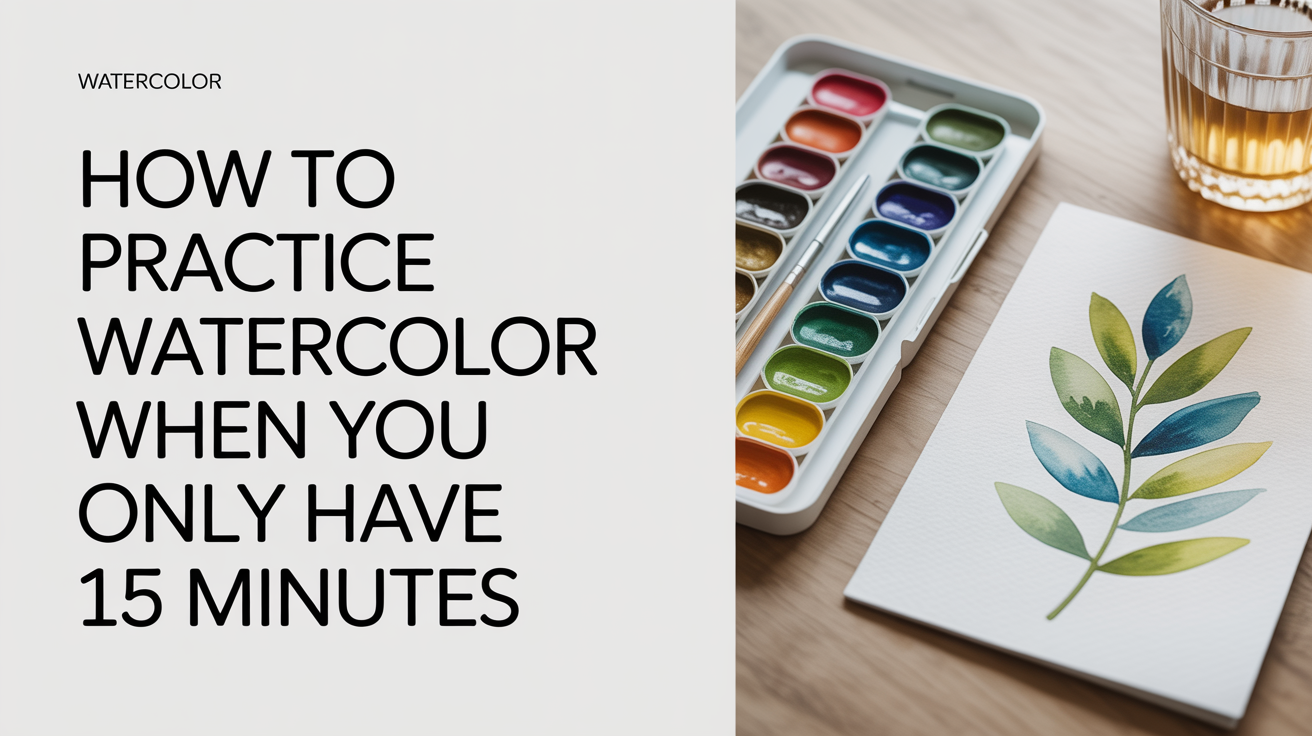
Most days the conditions for painting feel just out of reach. The light is wrong, the kitchen table is occupied, or you have 20 minutes before you need to leave. The good news: 15 minutes of focused daily watercolor practice beats a sporadic two-hour session every time. Your hand builds muscle memory through repetition, not duration. This guide gives you a set of quick watercolor exercises you can rotate through any morning, lunch break, or evening sliver of free time.
Why Short Sessions Work
Watercolor rewards regularity more than most mediums. The skills you're building, such as loading a consistent brush, reading wet shine, and judging when a wash is ready for the next layer, live in the hands, not in theory. A short daily practice keeps those sensations fresh so they're available when you sit down for a longer painting.
There's also a psychological benefit. A 15-minute session doesn't carry the weight of a "real painting," which means you're less likely to freeze and more likely to experiment. Low stakes, high repetition: that's the formula beginners benefit from most.
If you haven't picked up a brush yet, Watercolor for Absolute Beginners: How to Start in One Afternoon walks you through everything you need to know before your first session.
Set Up Fast (2 Minutes or Less)
A slow setup eats your practice window. Keep your kit ready to go:
- Leave your palette out with pigment already in the wells. Watercolor pans and even tube paint in a closed palette stay usable for days.
- Fill one jar of water and leave it next to the palette.
- Keep a small block or a few sheets of student-grade paper clipped to a board.
- Grab one round brush, size 8 or 10.
That's it. The goal is to be painting within two minutes of sitting down. If you spend the session chasing supplies, the practice doesn't happen.
Five 15-Minute Watercolor Warm-Ups to Rotate
These quick watercolor exercises are intentionally narrow. Each one targets a single skill so your attention stays focused rather than scattered across the whole painting.
1. Flat Wash Strips
Paint five horizontal strips of the same color, one after another, each one as even as possible. Load the brush fully, pull the bead of water across the paper, and reload before it dries. This teaches brush loading and bead control, two skills that underpin every wash you'll ever lay. If you're unsure how much water to use, How Much Water to Use in Watercolor: The Beginner's Biggest Question will help you calibrate.
2. Graded Wash from Dark to Light
Pick one color and pull a wash that transitions from deep pigment on the left to nearly clear water on the right. Keep adding water as you move across. This exercise builds control over dilution, which is how you create the full tonal range in a painting.
3. Wet-in-Wet Blooms
Wet a small square of paper with clear water. Drop in two colors while the surface is shiny. Watch what happens. Do it again with the paper at a different angle. This isn't about making a finished piece; it's about reading how wet paper behaves. That reading skill transfers directly to skies and loose florals.
4. Color Mixing Pairs
Choose two colors and fill a small grid of swatches, mixing them in different ratios. Label the proportions in pencil. You'll build a reference over time, and you'll internalize how pigments combine far faster than any chart in a book can teach you.
5. Single Shape Studies
Pick something nearby, a mug, a leaf, a small fruit, and paint just its silhouette as a flat shape. No details, no outlines. This trains you to see shape and value rather than outline and symbol. Ten minutes on one shape will do more for your observation than an hour of tracing.
A Simple Weekly Rotation
You don't need to decide each morning which exercise to do. A predictable schedule removes one more decision from the practice:
| Day | Exercise |
|---|---|
| Monday | Flat wash strips |
| Tuesday | Graded wash |
| Wednesday | Wet-in-wet blooms |
| Thursday | Color mixing pairs |
| Friday | Single shape study |
| Weekend | Free paint: pick any exercise or combine two |
After a month, swap in a new exercise or revisit the one that gave you the most trouble. Progress in watercolor shows up as fewer surprises, not as dramatic leaps.
What to Keep and What to Toss
Not every practice sheet needs to be saved. In fact, giving yourself permission to toss most of them frees you to work without attachment to the outcome. A few habits that help:
- Date each sheet in pencil at the bottom corner. Seeing the stack grow over a few weeks is motivating.
- Keep one sheet per week that surprised you, good or bad.
- If a wash turned out exactly as you intended, note what you did differently (paper angle, brush load, timing).
If you're still figuring out what supplies to keep around during these sessions, The 5 Things You Actually Need for Your First Watercolor Painting narrows the list down to what genuinely matters.
Frequently Asked Questions
Do I need watercolor paper for a 15-minute session, or can I use regular paper?
You can use regular paper for dry exercises like color mixing swatches or pencil planning. For any exercise involving water, though, regular paper will buckle and pill, which makes it harder to read how the paint is actually behaving. Student-grade watercolor paper isn't expensive, and using it keeps your practice honest.
I only have five minutes today. Is that worth it?
Yes, if you use the time deliberately. Five minutes of flat wash strips or a single wet-in-wet experiment still counts as repetition. The consistency matters more than the length.
My practice sheets look nothing like a "real" painting. Am I doing this wrong?
No. Practice exercises are not meant to look like finished work. Flat wash strips and color grids are drills, the same way scales are for a piano player. The connection to finished painting happens gradually as your hands learn what your eyes are asking for.
How long before I notice improvement?
Most beginners notice that their washes are more consistent and their colors cleaner after two to three weeks of daily practice. Improvement in observation (seeing shapes rather than symbols) tends to take a little longer, around four to six weeks. Neither timeline is a rule, just a rough average.
Should I practice with my best paints and paper, or save those for finished paintings?
Use mid-range supplies for practice. Student-grade paper and a small set of reliable paints are fine. Saving your best materials for "real" paintings creates a two-tier mindset that often means neither gets used. Your practice is real painting.