Materials & Tools
Why Watercolor Paper Buckles and How to Stretch or Tape It
Learn why watercolor paper warps when wet and the two simplest fixes: stretching or taping your paper before you paint.
You lay down a smooth wash, set your brush down, and come back five minutes later to find the paper has turned into a landscape of hills and valleys. The paint has pooled in every dip, your flat sky looks streaky, and the whole surface has warped away from the board. This is watercolor paper buckling, and it trips up almost every beginner.
The good news is that it is completely preventable. Once you understand what causes it, fixing it takes less than ten minutes of prep.
At a Glance
- Buckling happens because the wet side of the paper swells while the dry back stays tight, so the sheet bends to relieve the stress.
- Weight is the biggest factor: 90 lb paper buckles with almost any wet wash, 300 lb resists it almost entirely.
- Stretching (soaking the sheet, then taping it down wet) locks the fibers in their expanded state so there's no slack left to warp.
- Taping dry paper to a rigid board is faster and works fine for light to medium washes, but not for heavy wet-in-wet work.
- Brown gummed tape is the one material that reliably holds; masking tape and painter's tape lift under a wet wash.
- A buckled painting can usually be flattened after it dries fully, under weight, even if you forgot to pre-treat it.
Why Paper Buckles in the First Place
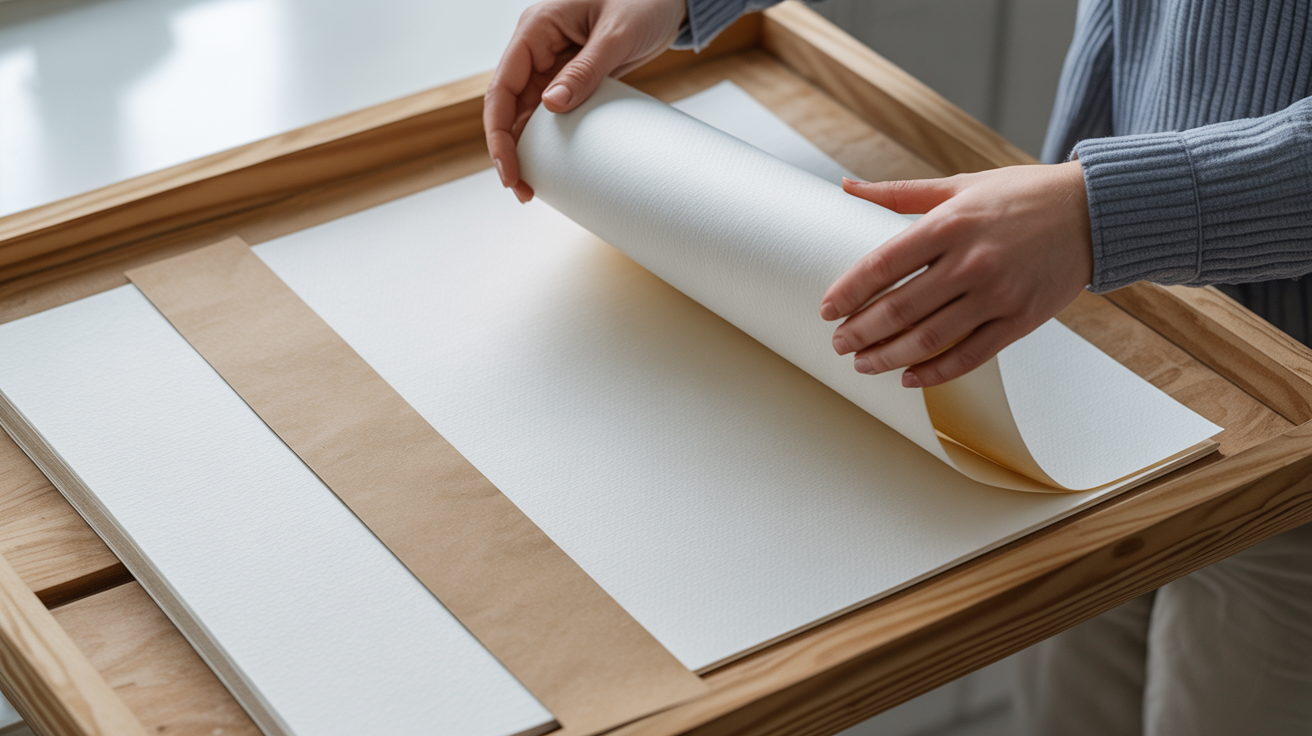
Paper is made of cellulose fibers. When those fibers absorb water, they swell. When they dry, they contract. The problem is that the fibers on the painted surface expand while the back of the paper stays dry and tight, so the two sides fight each other and the paper bends.
This isn't unique to watercolor paper; it's how any sheet made of cellulose fiber behaves. Paper conservation research on the topic explains the mechanism in more physical detail: cellulose fibers expand across their width as they absorb moisture, and as the sheet dries back out, the fibers shrink again and form new hydrogen bonds where they touch neighboring fibers, which is what locks the buckle in place if the paper wasn't restrained while it dried. The handprint guide to how watercolor papers are made covers this directly, and it also notes that rougher, less-compressed sheets tend to cockle more than smoother ones when wet, which is one more reason cold-press and rough papers need more careful handling than hot-press.
The amount of buckling depends on two things: how wet your wash is and how heavy your paper is.
Thin paper (90 lb / 185 gsm) buckles with almost any wet wash. Medium paper (140 lb / 300 gsm) handles light washes but will still warp if you pour a lot of water on it or work wet-in-wet. Heavy paper (300 lb / 640 gsm) resists buckling on its own because there is so much fiber that the surface expansion is spread across a much thicker sheet. If you have ever painted on 300 lb paper and noticed it stayed flat, that is why.
Most beginners start on 140 lb paper, which is a sensible middle ground on price and handling. For anything lighter than 300 lb, you will want to pre-treat the paper before you paint.
There are two reliable methods: stretching and taping. Both work. The difference is mainly in how much time you want to spend and how large the paper is.
How to Stretch Watercolor Paper
Stretching means saturating the paper with water first, then fixing it to a board while it is still wet. As it dries flat, the fibers lock in the expanded position. When you paint later, there is no slack left to pull the surface into hills.
What you need:
- A sheet of watercolor paper (90 lb to 140 lb is where stretching makes the biggest difference)
- A wooden drawing board or watercolor stretching board
- A tray or bathtub large enough to soak the paper
- Brown gummed tape (not masking tape, not packing tape)
- A sponge
Step by step:
- Cut your gummed tape into four strips, each a few centimetres longer than the sides of your paper. Set them aside.
- Submerge the paper in clean water. For 140 lb paper, soak it for about two to four minutes. Thinner paper needs less time; thicker paper may need a little more. You are aiming for the fibers to be fully saturated, not just damp on the surface.
- Lift the paper carefully and let the excess water drain off for a few seconds.
- Lay it flat on your board. Smooth out any large folds with the flat of your hand, working from the centre outward.
- Wet the gummed tape strips one at a time by running them across a damp sponge. Apply them immediately to the edges of the paper, half on the paper and half on the board, overlapping the corners slightly.
- Leave the board flat and horizontal while the paper dries. Do not prop it up. If one side dries faster than the other, you can get an uneven pull.
- Wait until the paper is completely dry before you paint. This usually takes one to three hours depending on the weight and your room temperature.
When the paper is ready, it will feel slightly taut, almost like a drum skin. You can paint wet washes, flood the surface with water, and work wet-in-wet without fighting the paper.
After the painting is done and fully dry, cut it free from the board with a craft knife or palette knife, running along the inside edge of the tape.
A common mistake worth naming: soaking the paper too briefly. If the fibers aren't fully saturated all the way through when you tape it down, the sheet keeps absorbing a little more water from the tape and the surrounding air as it sits, and it can pull unevenly against the tape as it finishes swelling. When in doubt, err toward the longer end of the soak time rather than the shorter one, especially with heavier stock.
How to Tape Watercolor Paper Without Stretching
If you do not want to wait for stretching to dry, or if you are working with smaller pieces, taping directly to a rigid board is a faster fix for lighter washes.
The key here is using the right tape. Brown gummed tape is still the best option because the glue is strong enough to hold the paper down as it expands. Masking tape tends to lift when the paper pulls hard under a wet wash. Painter's tape has the same problem.
What to do:
- Place your dry paper on a board, drawing board, or piece of thick plywood.
- Tear or cut four strips of gummed tape and wet them quickly with a sponge.
- Apply them to all four edges, overlapping both the paper and the board as you would when stretching.
- Let the tape dry for a minute or two, then paint.
This method holds well for light to medium washes. For very wet techniques, soaking and stretching first gives a more reliably flat result.
One small note: the tape goes around the border of the paper, which becomes your margin. If you want the full sheet for painting, account for this when you cut your paper to size.
Choosing the Right Paper to Reduce Warping
Prevention starts at the supply stage. See the guide to watercolor paper explained cold press hot press and rough for a full breakdown, but here is the short version for buckling specifically.
| Paper weight | Buckling with wet washes | Needs stretching? |
|---|---|---|
| 90 lb / 185 gsm | Severe | Yes, always |
| 140 lb / 300 gsm | Moderate | Yes for wet-in-wet |
| 200 lb / 425 gsm | Light | Optional |
| 300 lb / 640 gsm | Minimal | No |
If you paint primarily in dry-brush or light glazes, you can get away with 140 lb paper taped at the edges. If wet-in-wet is a regular part of your process, the investment in heavier paper or a proper stretch is worth it. Paper testing summaries like the handprint guide to watercolor paper brands confirm the pattern most beginners find on their own: the mainstream student-grade 140 lb papers behave consistently as long as they're taped or stretched, while lighter "sketch" papers warp even under moderate handling regardless of finish.
Watercolor blocks sidestep the buckling issue for small sheets. A block is a pad of paper glued on all four sides; the paper stays flat while wet and you detach the finished sheet after it dries, using a palette knife along the unglued edge. They are convenient but limit you to one sheet at a time.
The paints you use can also influence how much water you are putting down. If you are curious about paint choices, this guide to watercolor paint for beginners tubes vs pans explained covers how tubes and pans affect the water-to-pigment ratio in your mixes. Meanwhile, the way you load your brush matters too. The guide to how to choose your first watercolor brushes includes tips on brush water capacity that directly affect how wet your washes get.
What to Do If Your Paper Buckles While You Paint
Sometimes you forget to pre-treat, or you are experimenting on a loose sheet and the paper waves. A few options:
Wait for it to dry completely. A buckled painting often flattens considerably on its own as the moisture evens out. Do not try to iron or flatten it while it is still damp.
Flatten it under weight after drying. Once the painting is bone dry, place it face-up on a clean flat surface, lay a sheet of smooth paper over it, and stack several heavy books on top. Leave it overnight. Most moderate warps flatten this way.
Mist the back and press. For stubborn buckling, lightly mist the back of the dried painting with clean water, press it face-down on a clean board, and tape the edges with gummed tape. Let it dry fully under the tape. This re-stretches the paper after the fact.
None of these are as reliable as pre-treating, but they can rescue a painting you want to keep. A useful habit is to check a painting under weight after every session rather than only when a warp looks bad; a light press for a day or two, done routinely, keeps mild cockling from ever becoming a problem you have to fix later.
Frequently Asked Questions
Can I use regular masking tape instead of gummed tape?
You can try, but it often fails with wet washes. The adhesive on masking tape is not strong enough to hold the paper down when the fibers are swelling hard. The edges lift, paint seeps underneath, and the paper still buckles. Brown gummed tape is sold at most art supply shops and is worth having for this specific job.
How long does a stretched sheet last before I have to paint on it?
A properly stretched sheet stays flat and usable for several weeks. Once you have cut it from the board, it loses the tension, but as long as it is still mounted, you can come back to it at any time.
Do watercolor blocks completely prevent buckling?
Blocks reduce buckling significantly for small sheets, but very wet washes on a block can still produce some wave on light paper. They are a good practical solution for studies and smaller work, but for large wet paintings, a stretched sheet gives more control.
My gummed tape keeps falling off the board. What am I doing wrong?
The most common cause is applying the tape to a board that has not been roughed up enough for the glue to grip. Give the edges of the board a light sanding before your first stretch. Also make sure the tape is wet enough but not soaking; too much water dilutes the adhesive.
Is there a no-prep way to stop watercolor paper from buckling?
Moving to 300 lb paper is the closest thing to a no-prep solution. It is more expensive, but you can work directly on it without stretching or taping and most washes will not cause significant warping. For beginners who find the prep fiddly, it is often a better investment than continuing to fight lighter paper.
Does the direction I tape the paper matter, or can I just tape all four sides the same way?
Tape all four sides the same way; there's no directional grain effect worth planning around for hand-torn or machine-cut sheets sold for painting. What does matter is applying all four strips before the paper starts to dry unevenly, since a gap in time between the first and last strip can let one edge dry (and pull) before the others are secured.
Why does my paper buckle even though I taped it?
Usually one of three things: the tape wasn't wet enough to bond fully, the paper was too light for the amount of water in the wash, or one strip lifted partway through and you didn't notice. Press along every edge before you start painting and again halfway through a large wash to catch a lifting strip early, while you can still smooth it back down.