Materials & Tools
How to Choose Your First Watercolor Brushes
Find the best watercolor brushes for beginners: which shapes and sizes to start with, what to skip, and how to test before you buy.
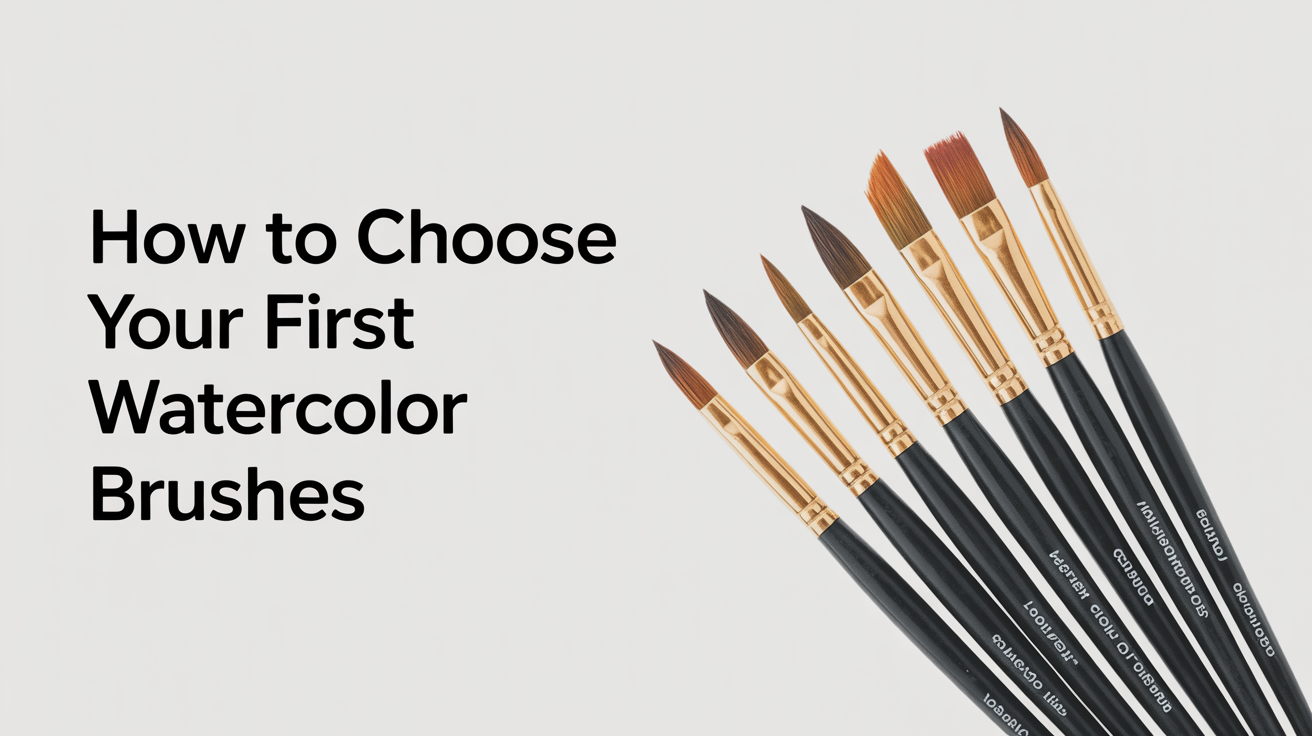
You do not need twenty brushes to start painting watercolor. Most experienced painters will tell you they reach for the same two or three brushes ninety percent of the time. Knowing which ones those are, and why, will save you money and frustration when you are just getting started.
Why brush choice matters more than you think
Watercolor is a wet medium, and a good brush does two things: it holds a reservoir of paint-loaded water, and it releases that water in a controlled way when you touch the paper. A brush that cannot hold water will drag and scratch. A brush that dumps its load all at once gives you muddy blooms you did not ask for.
This is why shape and quality matter more than quantity. Three capable brushes will serve you better than a twenty-piece set from a craft-store clearance bin.
The shapes worth knowing
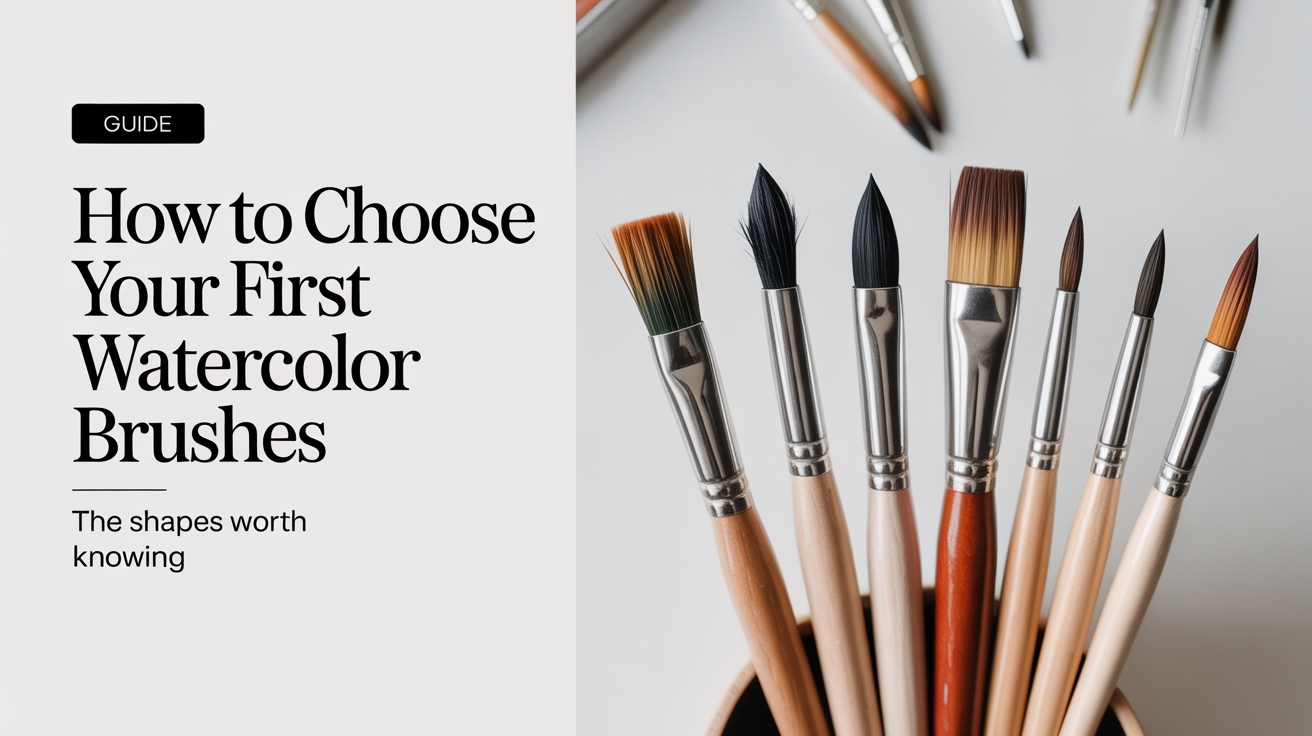
Round brushes
A round brush is the workhorse of watercolor. The ferrule (the metal band) holds a round bundle of hairs that taper to a point. That point can make fine lines. The belly of the brush holds enough water to lay down a smooth wash across a sky or a meadow. For most of what beginners want to paint, rounds do the job.
The sizes that actually matter for a first kit:
- Size 6 for detail work: flower petals, tree branches, small text
- Size 8 or 10 for mid-size areas: faces, leaves, building facades
- Size 12 if you want to cover backgrounds quickly without fighting refills
A size 8 round is often the single most-used brush in a beginner's kit. If you only buy one brush, make it a round in size 8 or 10.
Flat brushes
A flat brush has a straight edge across the top, like a chisel. A 1-inch flat is useful for wetting the paper before a wet-on-wet wash, or for painting the straight edge of a wall or a horizon. Beginners tend to overlook flats, but they make certain tasks much easier. One flat is enough to start.
Mop brushes
A mop is a large, round, loose-haired brush with an enormous water capacity. It is excellent for loading large areas of color fast. You do not need one immediately, but if you find yourself constantly running out of paint mid-wash, a mop solves that problem.
What to skip for now
Fan brushes, rigger/liner brushes, and specialty texture brushes are all real tools with real uses. They are not beginner priorities. Get comfortable with a couple of rounds first.
Natural hair vs. synthetic
This question comes up every time someone walks into an art store. Here is the short answer: for beginners, a quality synthetic is fine and often better value.
| Feature | Natural hair (kolinsky sable) | Synthetic |
|---|---|---|
| Water retention | Excellent | Good to very good |
| Spring (snap-back) | Very high | Moderate to high |
| Point | Excellent | Good |
| Price | High to very high | Low to moderate |
| Ethical concern | Yes (mink-family fur) | No |
Kolinsky sable, cut from the tail of the Siberian weasel, is widely considered the gold standard. A good kolinsky round holds an impressive reservoir and springs back to a clean point after every stroke. But a Series 7 kolinsky in size 8 can cost $40 or more on its own. That is a lot to spend before you know whether watercolor is your medium.
Modern synthetics have improved enormously. Brands like Princeton Neptune, Da Vinci Casaneo, and Escoda Versatil offer synthetics that handle well and hold decent water loads. For learning washes and basic technique, they are more than adequate. Once you fall in love with watercolor and want to invest, that is the time to try a kolinsky.
What makes a brush worth buying
Before you spend money on any brush, there is a simple test you can do at a physical art store: ask the staff to dip the brush in the water jar they keep on the counter. A quality round should:
- Snap back to a point when you shake off the water
- Hold its shape when pressed lightly against your thumbnail and then released
- Feel comfortable and balanced in your hand
If the hairs splay out and stay splayed, the brush lacks spring and will frustrate you.
When shopping online (where you cannot do the dip-test), stick to brands with return policies and read reviews specifically from watercolor painters, not general craft users.
A starter brush kit that actually works
Here is what you need to get painting without overbuying:
- 1 round, size 6 (detail and smaller marks)
- 1 round, size 8 or 10 (your main brush for most painting)
- 1 flat, 3/4 inch or 1 inch (wetting paper, broad strokes, horizon lines)
That is three brushes. Total cost in decent synthetics: roughly $15 to $30. Total cost in entry-level kolinsky: $40 to $80. Either way, you will have everything you need for months of painting.
Once you work through a few paintings, you will notice which tasks feel limiting. That is the right time to add a brush for a specific reason, not before.
Caring for your brushes
Watercolor brushes are more forgiving than oil or acrylic brushes because the paint is water-soluble and does not harden in the hairs. But a few habits will keep them in good shape:
- Rinse thoroughly after every session. Pigment left in the ferrule loosens the hairs over time.
- Never leave a brush standing hair-down in a water jar. The hairs bend and the tip never recovers.
- Store brushes flat or in a roll with the tips protected. A rubber band around a folded piece of cardstock works fine.
- Reshape the tip while damp and let it dry horizontally. If a round has lost its point, try a dab of gum arabic on the hairs while wet, shape it, and let it dry before rinsing.
The one thing that destroys brushes fastest is dried paint forced into the ferrule. Keep two water jars on your desk (one for rinsing, one for clean mixing water) and rinse frequently while you paint. This pairs naturally with how you set up your paints and palette, since a clean rinse jar protects both your brushes and your color mixing.
Frequently asked questions
How many brushes do I actually need to start?
Three is plenty: a small round (size 6), a medium-large round (size 8 or 10), and a 1-inch flat. Most beginner paintings can be completed with just two rounds. Do not let brush selection become a reason to delay painting.
Are expensive brushes worth it for beginners?
Not at first. A quality synthetic in the $8 to $15 range is enough to learn fundamental technique. The difference between a $10 synthetic and a $50 kolinsky is real, but it will matter much more once you know how to load a brush and control a wash. Invest in good watercolor paper before you invest in premium brushes.
Can I use acrylic or oil brushes for watercolor?
You can in a pinch, but they are not designed for it. Watercolor rounds are built for maximum water retention and a fine tip. Acrylic brushes are stiffer and often shorter-haired, which makes smooth washes harder to achieve. If you already own them, try them, but do not expect the same results.
My round brush is not coming to a point anymore. Is it ruined?
Sometimes. If paint has dried deep in the ferrule, the hairs splay permanently and no amount of reshaping will fix it. If it is just a loss of spring from being left tip-down in water, try reshaping the wet hairs, applying a small amount of gum arabic, and letting it dry horizontally. This often revives a brush that looks finished.
Does it matter what brand I buy?
It matters more than price alone. Cheap brushes from non-art-supply brands tend to shed hairs and lose their point quickly. Stick to brushes sold specifically for watercolor from art supply companies. Princeton, Escoda, Da Vinci, Winsor & Newton Cotman, and Raphael all make reliable beginner-friendly options. Your choice of brush should also match your paint grade, since student-grade paints and student-grade brushes can work together well as a learning kit without overspending on either.