Materials & Tools
Synthetic vs Natural Hair Watercolor Brushes: Which to Buy First
A plain-language comparison of synthetic, squirrel, and sable watercolor brushes, with a use-case table and a clear first-purchase pick for beginners.
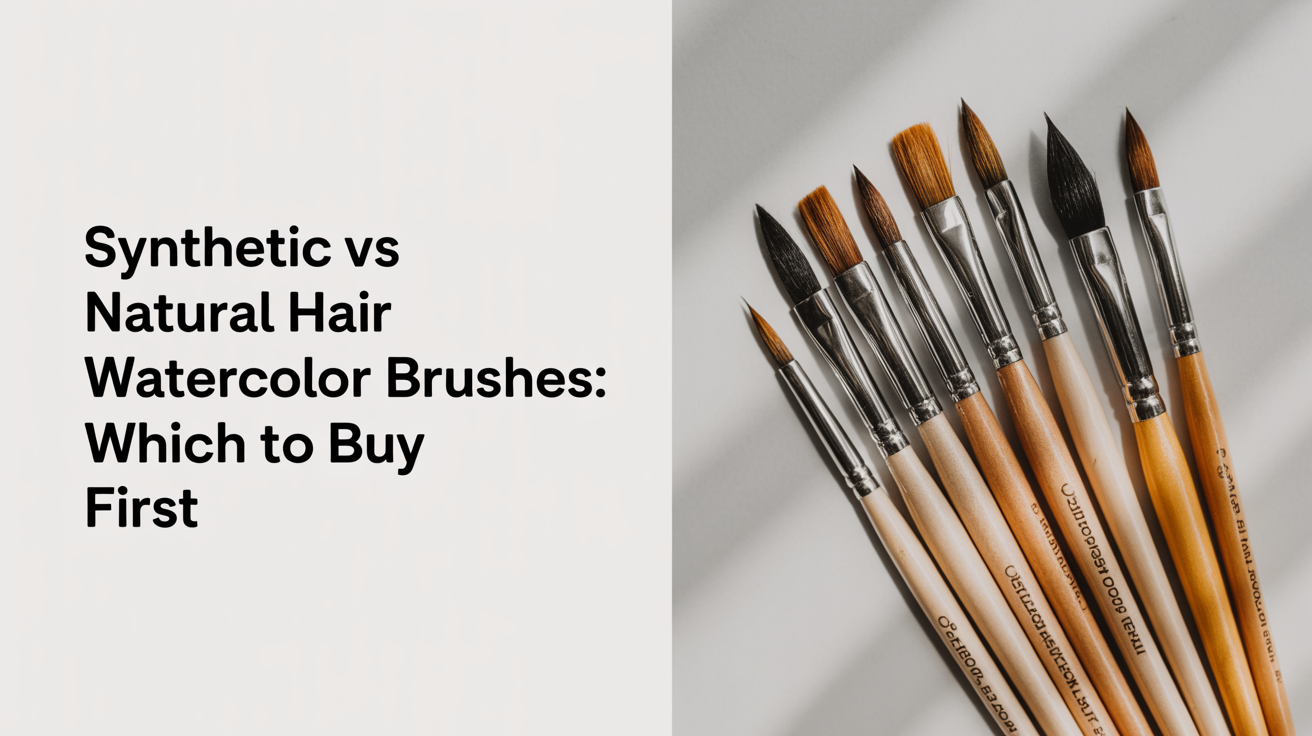
Stand in front of a brush display at any art store and you will see the same words repeated on tiny cardboard tags: synthetic, squirrel, sable, Taklon, Kolinsky, blend. None of it means anything until someone explains it, and the price tags swing from a few dollars to well over a hundred for what looks like the same size brush. The question of synthetic vs natural watercolor brushes is really a question about what the hair does when it is wet, and once you understand that, the wall of options gets a lot less confusing.
This guide breaks down what each hair type is actually good at, where the differences matter less than the marketing suggests, and what to buy first if you are starting out on a modest budget.
What "hair type" actually changes about a brush
Every watercolor brush has three jobs: hold a useful amount of water and pigment, release that water evenly as you paint, and spring back to a clean point or edge between strokes. Hair type affects all three, but not equally.
Water-holding capacity is the most noticeable difference. A natural hair brush generally carries more water and paint per stroke than a synthetic of the same size, which means fewer trips back to the water jar during a large wash. Point retention (also called "snap") is how well the tip returns to a fine point after it flexes, which matters most for detail work like eyes, whiskers, or the edge of a leaf. Price is the third variable, and it correlates with the first two, but not in a straight line. A well-made synthetic can outperform a poorly finished natural brush of the same price.
None of these are fixed laws. A brand's finishing, the density of the hair, and even the specific animal source (squirrel hair varies by region and season, for instance) all shift the numbers around. Treat everything below as a general tendency, not a spec sheet.
Synthetic brushes
Synthetic filaments, usually a nylon or polyester blend sold under names like Taklon, are made in a factory to a consistent shape, so quality is more predictable brush to brush than it is with natural hair. Modern synthetics have closed a lot of the gap with natural fiber:
- Water holding: improved a great deal in the last couple of decades, though most synthetics still hold noticeably less water than a squirrel or sable brush of the same size.
- Point retention: often very good, sometimes better than natural hair, because manufacturers can tune the filament's stiffness.
- Price: the biggest advantage. A perfectly usable synthetic round costs a fraction of a natural equivalent.
- Durability: synthetics resist moths, don't need special storage, and tend to handle rougher paper without splaying as quickly.
The tradeoff is mostly about "feel" and capacity for large washes. A synthetic mop for a big sky wash will need reloading more often than a squirrel mop, and some painters find synthetic hair feels slightly stiffer and less responsive under the hand. If you're comparing brush shapes rather than hair type, our guide to round vs flat brushes covers how the shape itself changes what a brush can do, independent of what it's made from.
Natural hair: squirrel, sable, and everything between
Natural hair brushes are cut from animal hair, and the two names you'll see most in watercolor are squirrel and sable.
Squirrel hair is famous for water capacity. It has almost no natural spring, which sounds like a flaw but is actually the point: a squirrel mop or quill can carry an enormous amount of water and lay it down in a smooth, controlled sheet, which is why they're the classic choice for big sky washes and loose, wet-in-wet work. What squirrel hair does not do well is hold a sharp point for fine detail, because it lacks the snap to bounce back into shape.
Sable hair, most often labeled Kolinsky sable, is the closest thing to an "all-purpose premium" hair type. It combines strong water holding with real point retention and a springy, responsive feel, which is why Kolinsky rounds are the brush most professional painters reach for when they can only own one good brush. That performance comes at a real cost, both in price and in the fact that quality varies significantly between manufacturers and even between individual brushes in the same line, so a claim like "this holds a perfect point" is a general tendency for well-finished sable, not a guarantee on every brush you'll pick up.
Blends mix synthetic filament with natural hair, often squirrel or a lower grade of sable, to land somewhere in the middle: more water capacity and a softer feel than pure synthetic, at a lower price and with more consistency than pure natural hair. For a lot of intermediate painters, a good blend is the best value in the whole shop.
Hair type by typical use
| Hair type | Water capacity | Point / edge retention | Typical price | Best for |
|---|---|---|---|---|
| Synthetic (Taklon) | Low to moderate | Good to very good | Low | Practice, detail work, students, travel kits |
| Squirrel | Very high | Low | Moderate to high | Large skies, wet-in-wet, loose washes |
| Sable (Kolinsky) | High | Excellent | High to very high | All-purpose precision work, fine detail with control |
| Synthetic-natural blend | Moderate to high | Good | Moderate | General painting, a step up from pure synthetic |
Read this table as a starting point for shopping, not a rulebook. A high-quality synthetic can beat a cheap, poorly finished sable brush in every category on this list, and squirrel brushes from different makers vary in how much snap they have.
What to buy first on a modest budget
If you're just getting into watercolor, buy synthetic first. A small set of synthetic rounds, maybe a size 6 or 8 and a size 12, plus one flat, will teach you everything about water control, paint-to-water ratio, and paper behavior without asking you to spend real money on something you might handle roughly while you're still learning. Synthetics also forgive beginner habits like scrubbing the paper or leaving a brush sitting in the water jar, habits that will genuinely shorten the life of a natural hair brush.
Once you know your own painting habits, that is the point to consider one nicer brush. Most painters who move up buy a single medium sable or a synthetic-natural blend round, something in the size 8 to 10 range, and keep it for work where control matters. A whole set of sable brushes is rarely worth it for a beginner; one good round does more for your painting than five mediocre ones. Our full walkthrough on choosing your first watercolor brushes goes deeper into sizes and shapes if you want the complete starter list, and the budget starter kit guide lays out exactly what's worth spending on early and what you can skip entirely.
A rough, sensible budget path looks like this: start with two or three synthetic brushes under the price of a single lunch out, add a synthetic-natural blend round once you've painted for a few months and know you'll stick with it, and treat a Kolinsky sable as a reward purchase once you have a style and habits that would actually benefit from it. There's no rush. Plenty of experienced painters do beautiful work with an all-synthetic kit for years.
Caring for either type
A little care goes further than the hair type itself in most beginner brushes. Rinse thoroughly after every session, reshape the tip with your fingers while damp, and store brushes flat or bristle-up so water doesn't pool in the ferrule and loosen the glue. Never leave a brush standing in a water jar; it bends the hair against the metal ferrule and ruins the point on natural and synthetic brushes alike. A mild soap made for brushes occasionally removes built-up pigment, but daily rinsing with plain water is enough for most painters.
Frequently Asked Questions
Is synthetic or natural hair better for watercolor beginners?
Synthetic is the better starting point for most beginners. It costs less, tolerates rougher handling, and still holds a decent point for most subjects. Natural hair rewards experience more than it helps someone still learning basic water control.
Do synthetic brushes ever match natural hair performance?
In point retention, often yes, some synthetics are excellent. In raw water capacity for large washes, natural hair, especially squirrel, still tends to hold more, though the gap has narrowed with better synthetic filaments over the years.
What is the difference between squirrel and sable brushes?
Squirrel hair holds a huge amount of water but has little spring, so it excels at big, loose washes and struggles to hold a fine point. Sable, particularly Kolinsky, combines strong water capacity with real point retention, making it a better all-purpose choice for detail and control.
Are blended brushes worth buying?
For a lot of painters, yes. A synthetic-natural blend gives you more water capacity and a softer feel than pure synthetic at a price well below full natural hair, and it's a sensible step up once you've outgrown a beginner synthetic set.
How many brushes do I actually need to start?
Two or three is plenty: a medium round, a larger round or mop for washes, and one flat. Quality and shape matter more at this stage than having a large collection, and a small synthetic kit will teach you more than a large one you don't yet know how to use.