Materials & Tools
Round vs Flat Brushes: Which Watercolor Brush Does What
Learn the practical differences between round and flat watercolor brushes, when to use each shape, and how to build a simple starter set.
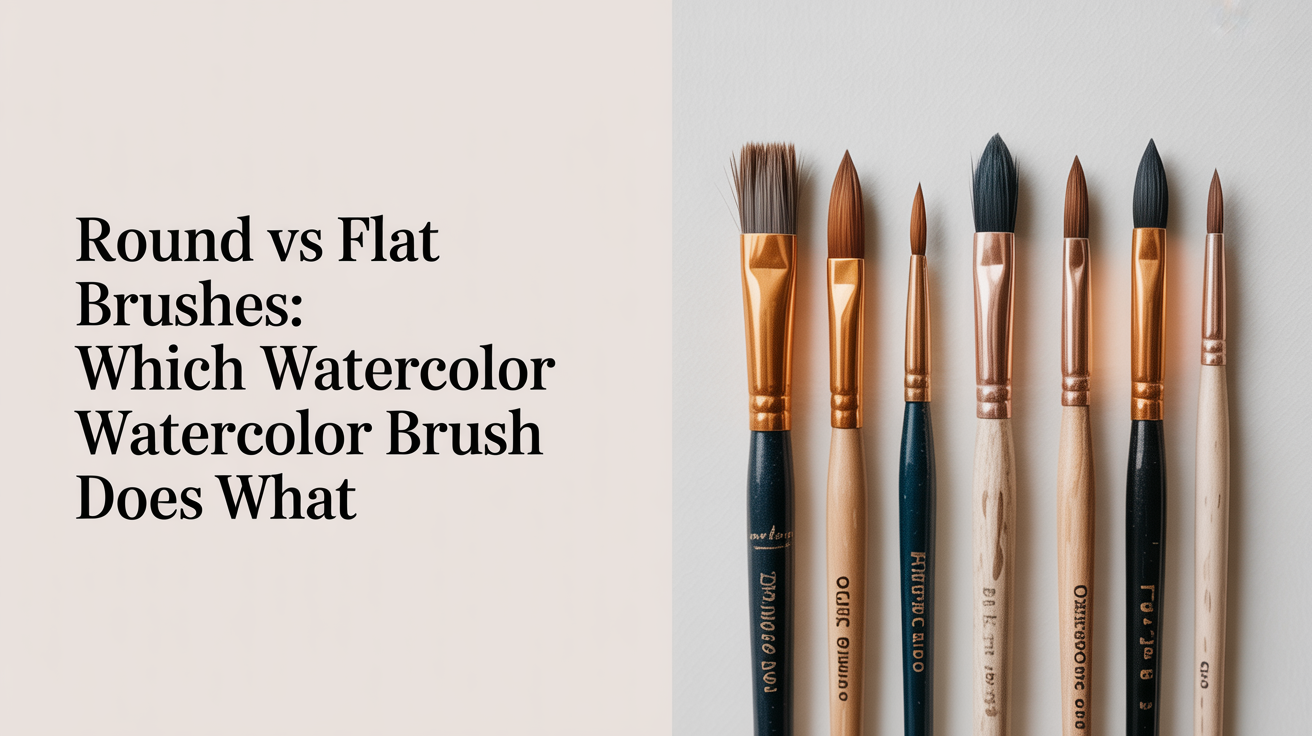
Most beginners buy a brush set, spread the brushes out on the table, and then feel genuinely unsure which one to pick up first. The shapes look different, but without knowing what each one is designed to do, the choice feels random.
This guide focuses on the two brush shapes you will use most: rounds and flats. Once you understand how each one works, you can make deliberate choices rather than guessing, and you will get more out of every brush you already own.
What Makes a Round Brush a Round Brush
A round brush has a full belly of bristles that tapers to a fine point. That combination is what makes rounds so useful for watercolor. The belly holds a generous amount of water and paint, so you can lay down a stroke without constantly reloading. The tip lets you pull fine lines, suggest details, and change direction mid-stroke.
Rounds come in numbered sizes, typically from 000 (tiny) up to 24 or larger. A size 6 or 8 is a practical starting point for most work. It holds enough paint to cover a mid-size area, and the tip is still precise enough for most detail work beginners encounter. A size 2 or 4 handles smaller details once you need them.
The key thing to learn with a round brush is pressure. Light pressure on the tip gives you a thin line. Pressing down slightly lets the belly contact the paper and spreads the stroke wider. That range of marks from a single brush is one reason rounds are so central to watercolor painting.
What Makes a Flat Brush Different
A flat brush has bristles cut to a squared-off edge. The ferrule (the metal band holding the bristles) is wide and thin, which gives the brush its characteristic rectangular shape when you look at it head-on.
Flats do specific things well that rounds struggle with. They lay broad, even strokes across a surface with a consistent edge on both sides. They cut clean lines along the top or bottom of a shape. A flat brush pressed sideways onto the paper creates a stroke as wide as the brush head; the same brush dragged on its narrow edge draws a thin, ruler-straight line.
Common flat sizes for beginners are half-inch and three-quarter-inch. A one-inch flat is useful if you are painting large backgrounds or skies. Flat brushes are also labeled in metric widths (10mm, 19mm, 25mm).
When to Reach for a Round
Rounds are the most versatile brush shape in watercolor, and if you had to pick just one brush to start with, a medium-size round would serve you best across the most situations.
Use a round when you are:
- Painting loose organic shapes like leaves, petals, or clouds
- Working on subjects that require you to change direction (trees, curving paths, figures)
- Pulling thin lines for stems, veins, or fine details
- Loading and dropping pigment for wet-in-wet effects
- Moving paint around in an area without worrying about clean straight edges
If you are building the foundational skills covered in how to choose your first watercolor brushes, a size 6 or 8 round is the single most useful purchase to start with.
When to Reach for a Flat
A flat brush earns its place in a kit when you need control over edges and coverage.
Reach for a flat when you are:
- Laying a wash across a large area like a sky or background
- Painting architectural subjects where straight edges matter (windows, walls, doors)
- Blocking in rectangular shapes before adding detail
- Creating a clean horizon line or waterline in a landscape
- Using the edge of the brush to paint thin, precise lines
Flats also perform well for wet-on-wet work in larger areas. Because the brush head is wide, it deposits a lot of paint quickly, which is useful when you need to charge color into a wet wash before the paper dries.
One technique worth trying early: hold the flat brush at a low angle and drag it lightly across dry paper. The bristles skip across the tooth of the paper, which creates a broken, textured stroke called a dry-brush effect. This works well for suggesting water, bark, or rough stone. The paper type you use affects how much texture comes through, which is explored in watercolor paper explained: cold press, hot press, and rough.
Comparing Round vs Flat at a Glance
| Task | Round | Flat |
|---|---|---|
| Fine detail and lines | Yes | Edge only |
| Loose, organic shapes | Yes | Less suited |
| Broad even wash | Medium size works | Yes |
| Straight-edged strokes | Difficult | Yes |
| Wet-in-wet, dropping color | Yes | Yes (large areas) |
| Dry-brush texture | With practice | Very easy |
| Versatility across subjects | High | Medium |
Other Brush Shapes Worth Knowing
Rounds and flats are the core shapes, but a few others come up regularly in beginner sets.
Mop brushes look like large, full rounds with a very soft belly. They hold a large volume of water and paint, which makes them good for wetting large areas or laying initial background washes. They have less control than a standard round, but that lack of control can actually help when you want a loose, flowing first layer.
Rigger brushes (also called liner or script brushes) are very long and thin. They hold just enough paint to draw extended lines without lifting and reloading. Riggers are used for things like ship rigging (hence the name), bare tree branches, fine grasses, or any continuous thin line.
Hake brushes are wide, flat, and very soft. They are useful for wetting large sheets of paper before a wet-in-wet session and for laying transparent washes over large areas without streaks.
You do not need all of these to start. A medium round plus a half-inch or three-quarter-inch flat covers most of what a beginner needs. From there you can add shapes as specific needs come up.
For a broader look at the materials side of getting started, including paint formats and the difference between student and artist grades, see watercolor paint for beginners: tubes vs pans explained.
Frequently Asked Questions
Can I do most watercolor painting with just one brush?
Yes, a single medium-size round (size 6 or 8) will handle most beginner projects. You can vary the stroke width by adjusting pressure, and the tip is fine enough for most detail work at this stage. A flat becomes useful once you work on subjects with straight edges or large background washes, but it is not essential from day one.
What does the number on a watercolor brush mean?
The number indicates the size of the brush head, with larger numbers meaning larger brushes. The exact measurements vary between brands, so a size 8 from one maker may be slightly different from a size 8 from another. When in doubt, look at the actual bristle length and head width rather than relying on the number alone.
Are synthetic brushes good enough for beginners?
Yes. Modern synthetic watercolor brushes hold water well, spring back to their point after a stroke, and work well for most techniques. Natural hair (sable, squirrel) has a softer feel and holds more paint in the belly, but the difference matters less when you are learning fundamentals. A good synthetic round is a practical and budget-friendly choice when starting out.
Why does my flat brush leave streaks in a wash?
Streaks in a flat wash usually mean the brush ran out of paint partway through the stroke, or the angle changed and caused one side of the bristles to drag. Try loading more paint, work faster on wet paper, and keep the brush at a consistent low angle throughout the stroke. Tilting the paper slightly downward also helps the wash flow under gravity and self-level.
Do I need a large brush for backgrounds and a small one for details?
Not necessarily. Many painters use a medium round (size 8 to 12) for both backgrounds and details by adjusting pressure and technique. Having a separate large brush speeds up wetting and washing large areas, but you can manage without one early on. Add brushes based on actual needs rather than buying a complete set before you know what you are painting.