Light, Value & Composition
How to Save the White of the Paper in Watercolor
Saving whites in watercolor is easier than it looks. Learn four proven methods to preserve white of the paper for glowing highlights.
Saving whites in watercolor is one of the most important habits you can build early. Unlike oils or acrylics, you can't simply paint white on top of a mistake later. The paper itself is your white, and once you cover it, it's gone. The good news: there are four reliable ways to hold onto those bright spots, and you don't need expensive supplies to use any of them.
Why the white of the paper matters so much
Watercolor is a transparent medium. Light passes through the paint, bounces off the paper, and comes back to your eye. That bounce is what gives a watercolor painting its glow. When you mix white gouache or titanium white watercolor into a painting, you're adding an opaque pigment that reflects light differently. The result tends to look chalky or flat compared to untouched paper.
This is not a rule you need to follow slavishly. Plenty of experienced painters use white gouache for small corrections or bright accents. But as a beginner, training yourself to think about whites before you put paint down will make every painting cleaner and more luminous. Understanding how to paint light to dark is the foundation this sits on.
Planning your whites before you start
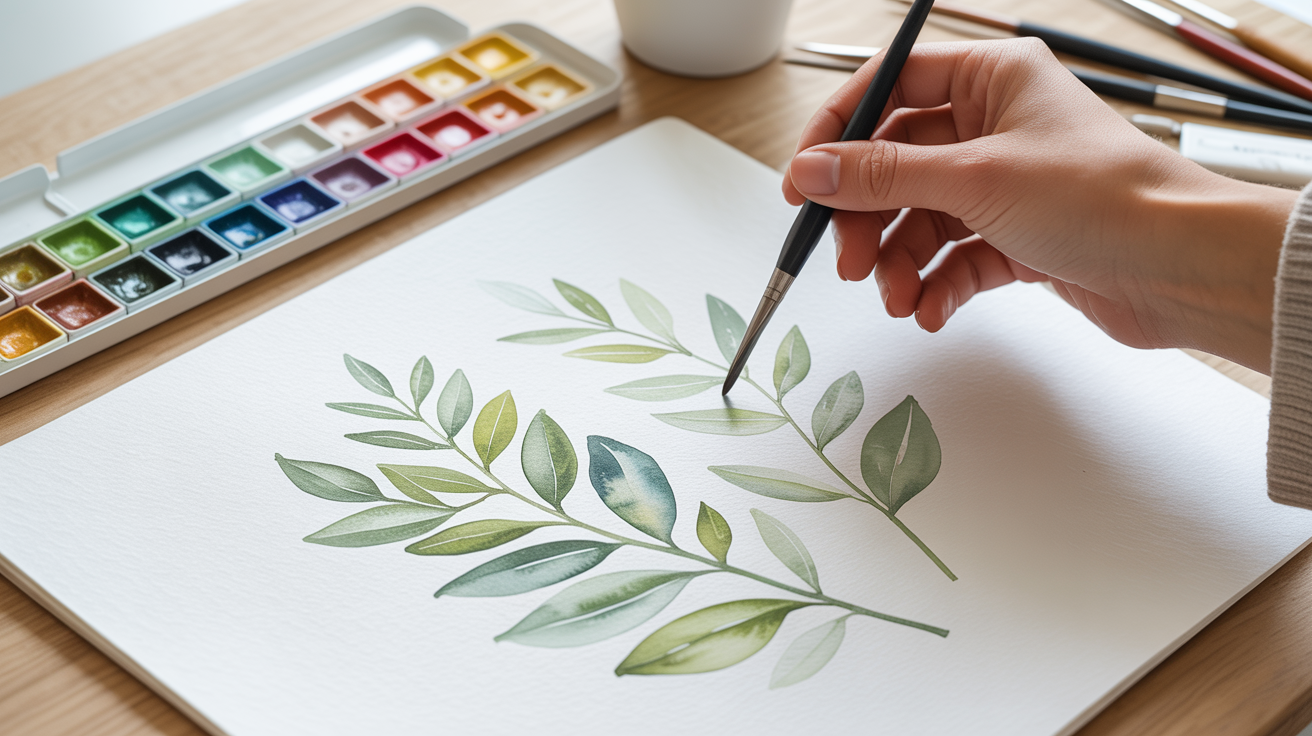
The easiest way to preserve white is to simply not paint there. This sounds obvious, but it requires planning.
Before you pick up a brush, spend two minutes looking at your subject or reference and locating the brightest highlights. Where is the sun hitting directly? Where is the water catching the light? Where is the paper going to stay bare?
A quick value study can help enormously here. Doing even a five-minute pencil sketch to map out light and dark areas will tell you exactly which shapes need to stay white. A quick value study before you paint doesn't have to be detailed. You're just making a mental map so you're not deciding mid-wash.
One practical habit: lightly circle or mark your white areas in pencil before you start. Pencil marks will be covered by subsequent washes and won't show through lighter glazes. This gives you a visual reminder to steer around those spots.
Four methods for saving whites
1. Painting around the white shapes
This is the most important skill and the one you should practice most. You load your brush, then deliberately paint the wash up to the edge of a white shape without crossing it.
It feels awkward at first. Your instinct is to flood paint across the whole area and figure out whites later. Resist that. Work slowly near the edges of a white shape. Use a smaller brush (a size 6 round) to cut in carefully around the shape, then switch to a larger brush (size 8 or 10) to fill in the surrounding color.
The wash does not need to be perfect. Watercolor is forgiving of soft, slightly irregular edges next to reserved whites. In fact, perfectly hard edges around a white shape can look stiff. Let the brush meander a little.
2. Masking fluid
Masking fluid (also sold as liquid frisket) is a latex-based liquid you brush onto the paper before you paint. Once dry, it acts as a barrier. You paint right over it, and when the paint is fully dry, you rub the masking off with your finger or a rubber eraser, revealing clean white paper underneath.
It works well, but there are a few things to know before you reach for it:
- Apply masking fluid with an old brush or a ruling pen. It will ruin a good brush quickly.
- Let the masking dry completely before you paint over it (usually 5-10 minutes).
- Don't leave masking on the paper for more than a few hours. It can bond to the paper fibers and tear the surface when you remove it.
- Masking produces hard edges. That can be exactly what you want for crisp highlights on metal or water droplets. It looks unnatural for soft cloud edges or skin highlights.
- On hot-press paper, masking tends to lift the surface. Cold-press (140 lb / 300 gsm) is safer.
Masking fluid is a good tool for complex shapes with lots of small white dots, like light sparkling on water, or the bright spots in a mass of foliage.
3. Lifting wet paint
If you've just laid down a wash and want to pull some of it back, you can lift the wet paint with a dry brush, a dry corner of a paper towel, or even a dry fingertip.
This doesn't give you back clean white. It lightens the area, pulling up enough pigment to suggest a highlight. Granulating pigments like ultramarine or raw sienna lift more cleanly than staining pigments like phthalo blue or quinacridone rose.
Work fast. You have about 30 to 60 seconds before the wash starts to set, and disturbing a drying wash will cause blooms or cauliflowers. If you want to lift while the wash is still workable, keep your second water jar clean and your lifting brush or tissue nearby before you put paint on the paper.
4. Wax resist (the candle trick)
A white candle or a white wax crayon pressed firmly onto dry paper before you paint will resist the watercolor wash. When you paint over the waxed area, the pigment beads and pools around the wax, leaving a broken, irregular texture.
This is not precise. You can't use it for a clean edge or a defined shape. But for sparkling water, rough stone texture, or the texture of tree bark, it creates a beautiful random quality that is nearly impossible to achieve by hand. It's also cheap and requires no drying time.
Wax resist is permanent. You can't remove it later.
Comparison of the four methods
| Method | Best for | Edge quality | Reversible? |
|---|---|---|---|
| Painting around | Any shape you planned in advance | Soft to medium | No (but controllable) |
| Masking fluid | Complex small whites, crisp highlights | Hard | Yes, until paint dries |
| Lifting wet paint | Soft glows, subtle mid-tone lightening | Soft | Partially |
| Wax resist | Texture, sparkle, rough surfaces | Ragged/broken | No |
Common mistakes and how to avoid them
Beginners run into the same handful of problems when they start trying to preserve whites.
Forgetting to plan ahead. You get excited and start painting, then realize at the halfway point that you've covered the highlight you needed. Slow down at the start. Two minutes of planning saves ten minutes of frustration.
Using masking fluid on cheap paper. Thin student-grade paper doesn't have the sizing to handle masking. It tears. Stick to 140 lb (300 gsm) cold-press until you're confident.
Lifting paint too late. If you try to lift a wash after it has dried, even a little, you risk disturbing the paper surface and getting a rough, muddy spot. Lift while the paint is wet, or wait until it's bone dry and use a damp brush to reactivate.
Overworking edges near white shapes. The temptation is to go back in and tighten the edge around a white shape. Each pass disturbs the paper more, and the edge gets muddier. Trust your first pass. If the edge is slightly ragged, leave it.
Placing whites without considering their context. A white shape only reads as light if the area around it is darker. This connects directly to value planning. If you flatten everything to a similar mid-tone, your preserved whites will just look like unpainted holes. The contrast between the white and the surrounding wash is what makes it glow. Understanding soft vs hard edges in watercolor will help you make those whites read correctly in context.
A simple practice exercise
Take a scrap piece of 140 lb cold-press and paint a small scene with at least three different white elements: a white flower, a reflection on water, and a highlight on a curved surface. Use a different method for each white. Paint around the flower petals. Use masking for the water sparkle. Lift wet paint for the curved highlight.
Doing this side by side shows you where each method shines. Most painters end up using a combination in every painting, and knowing the feel of each one makes choosing easier.
Frequently asked questions
Can I just use white watercolor paint instead of saving the paper?
You can, and many painters do. White watercolor (often sold as Chinese white) and white gouache are both useful for small corrections and bright accents. But they're opaque, so they reflect light differently from transparent washes. The result tends to look cooler and less luminous than reserved paper. White paint works better for very small spots (like the glint in an eye) than for large bright areas.
My masking fluid is tearing the paper when I remove it. What am I doing wrong?
Usually this means one of two things: the paper is too light (under 140 lb / 300 gsm), or the masking was left on too long. Masking fluid can bond to paper fibers if it sits for more than a few hours, or if it's applied in a warm room. Remove it as soon as the overlying paint is dry. You can also try warming it slightly with a hair dryer on low heat before peeling, which softens the latex.
How do I get a really crisp white edge without masking?
Use a small round brush (size 4 or 6) and a relatively dry mix. Load the brush, touch off the excess on the rim of the palette, then paint slowly along the edge of the white shape. The drier the mix, the more control you have. Some painters also use a piece of low-tack masking tape (blue painter's tape) pressed firmly along a straight edge to get a clean line.
Why do my preserved whites look dingy or gray once the painting is done?
Usually because of reflected light from surrounding dark passages, or because pencil lines under the paper are visible. Make sure your pencil sketch is light. Also, the relative brightness of your whites depends on the darkness of the surrounding washes. If your darks are too pale, the whites won't pop. Painting light to dark and building your deepest darks last will make a big difference.
Does the type of paper affect how well whites are saved?
Yes, noticeably. Heavier paper (140 lb / 300 gsm or above) holds up better to masking and wet lifting. Cold-press paper has a slight texture that gives soft edges around reserved whites. Hot-press paper is smooth and gives crisper edges, but it doesn't handle masking as well. Rough paper has more tooth and can make painting around small white shapes harder. For beginners, 140 lb cold-press is the most forgiving for all four methods.