Washes & Techniques
How to Lift Watercolor for Highlights and Fixes
Learn lifting watercolor techniques to recover highlights, soften edges, and fix mistakes using brushes, sponges, and tape.
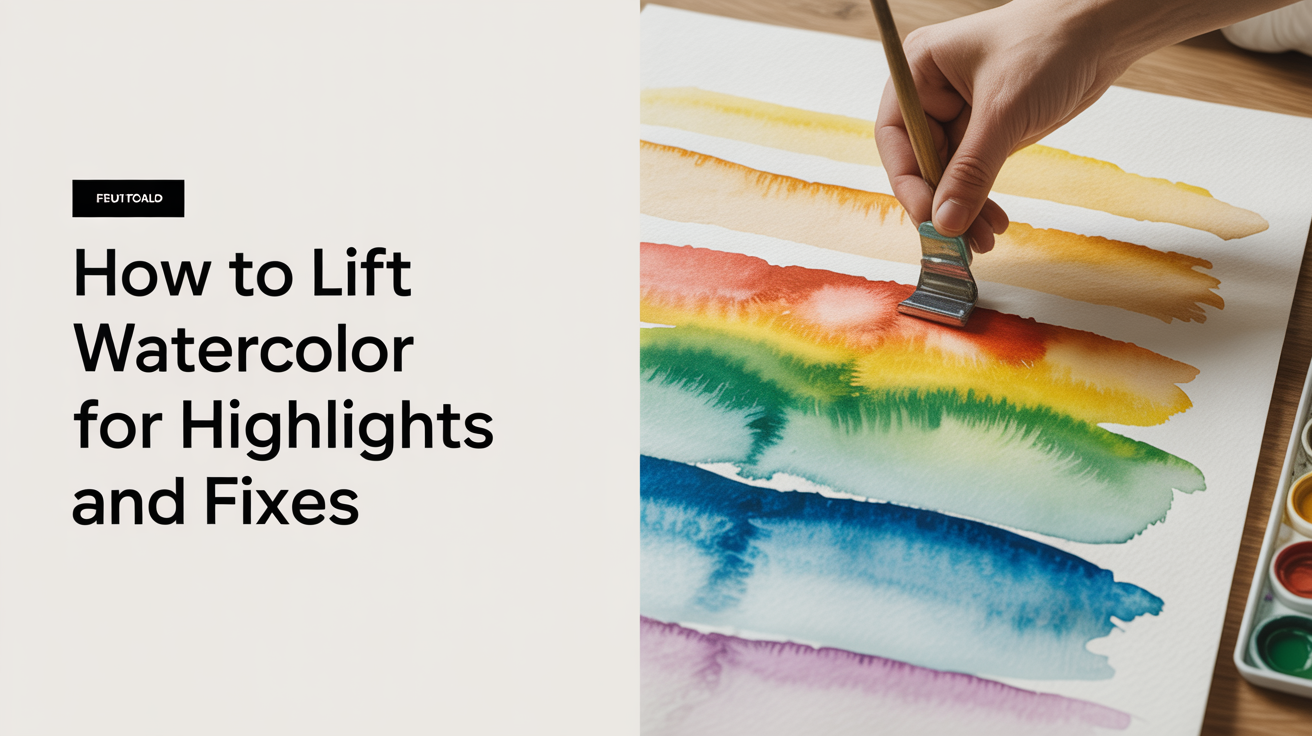
Watercolor feels unforgiving until you discover lifting. Lifting means pulling wet or dry paint back off the paper so you can recover a light area, soften an edge, or fix a shape that went wrong. It is not a trick for covering mistakes so much as a natural part of how the medium works. Once you understand a few reliable methods, you will stop treating every stroke as permanent.
What Lifting Actually Does
When watercolor dries, the pigment particles settle into the surface of the paper. On a toothy cold-press sheet, they nestle into the texture and grip more firmly. On a smoother hot-press sheet, they sit closer to the surface and release more readily.
Lifting removes some of those particles. You rarely get back to pure white paper unless you act while the paint is still wet, but you can:
- Pull out soft, glowing highlights in clouds, petals, and water
- Lighten an area that dried too dark
- Soften a hard edge that crept in while the paint dried too quickly
- Correct a shape that strayed outside its intended boundary
The key variable is timing. Wet paint lifts cleanly. Damp paint lifts partially. Fully dry paint requires more effort and leaves a residue depending on the pigment and paper.
How to Lift Watercolor Paint While It Is Wet
Lifting wet paint is the most forgiving window. You have roughly thirty seconds to a few minutes depending on your paper and how much water you loaded.
Thirsty brush method: Squeeze most of the water out of a clean brush on a dry cloth. Touch the tip to the wet area and let capillary action draw the paint into the brush. Rinse the brush, squeeze it dry again, and repeat. Each pass lifts more pigment. This works beautifully for cloud shapes, where you drag the brush along the top of a wet sky wash to pull out a soft highlight.
Clean damp tissue: Fold a piece of tissue or paper towel and press it gently onto wet paint. Lift straight up rather than smearing. This removes a broad patch quickly and creates soft, cloud-like shapes.
Cotton swab: Good for smaller areas. Blot rather than scrub. Two or three fresh swabs in a row can pull a bright highlight out of a wet petal.
Before a content run it helps to have already laid a smooth base. See how to paint a flat wash in watercolor step by step if you want a consistent surface to lift from, since patchy washes produce uneven results when you try to pull pigment back out.
How to Lift Dry Watercolor Paint
Once paint dries fully, lifting takes more deliberate effort. The results depend heavily on the pigment and the paper.
Re-wet and scrub: Load a stiff damp brush (an old watercolor brush with splayed bristles works well, as does a small synthetic scrubber) with clean water. Gently scrub the dried area in small circles, then blot immediately with a clean tissue. Let the paper dry completely before glazing over the spot or the softened fibers will pill.
Natural sponge: Dampen a small natural sea sponge, squeeze it nearly dry, and dab at the area. Natural sponges produce softer, more irregular edges than a brush, which makes them useful for rocky textures or foliage breaks.
Stiff bristle brush: A flat synthetic brush with some tooth can scrub out a defined shape. Work with light pressure and rinse the brush frequently. Too much force tears the paper surface, making future glazes look rough and patchy.
Staining pigments such as phthalocyanine blue, quinacridone magenta, and viridian resist lifting stubbornly. Granulating earth pigments like raw umber and burnt sienna lift far more readily. Over time you develop an instinct for which colors in your palette surrender and which hold on.
Masking Tape and Wax Resist for Pre-Planned Lifting
Lifting does not have to be corrective. You can plan a light area before you paint and protect it from the start.
Masking tape: Low-tack painter's tape pressed firmly onto dry paper protects the area underneath while you wash over it. Peel slowly at a shallow angle after the paint dries. This leaves a crisp edge, useful for boat hulls, fence posts, and horizon lines. Test the tape on a scrap of your paper first since high-humidity environments or overly wet washes can cause bleed underneath the edge.
Lifting with tape on wet paint: Lay a strip of tape on wet paint, press it down gently, and peel immediately. The paint beneath the tape transfers to the adhesive, leaving a pale stripe. The edge will be softer than tape applied to dry paper, which suits reflected light on water or a glowing shaft of light through trees.
This approach connects naturally to how you plan a wet-on-wet watercolor for soft blends. If you know the highlights are staying light from the start, you protect them first and work the wet-on-wet passages around them.
Recovering a Graded Wash That Dried Too Heavy
A common problem: you painted a graded sky wash and the dark end came out much darker than you wanted, or the transition is too abrupt. Lifting can smooth it out.
Wet a wide flat brush with clean water and stroke it across the dark area. Let the water sit for ten seconds to rehydrate the pigment, then blot gently with tissue. Work in horizontal bands rather than rubbing back and forth. After each blot, step back and assess before adding more water. The tendency is to overwork and disturb the paper surface, so patience matters here.
If the gradient is the problem rather than the value, you may need to glaze a pale wash over the area after lifting to blend the transition. Wait for the lifted area to dry fully, then apply a very diluted layer of the same color or a close neighbor.
For a refresher on building a smooth transition in the first place, how to paint a smooth graded wash covers the approach that gives you the most control before lifting becomes necessary.
Frequently Asked Questions
Can I lift paint to get back to pure white paper? Only if you act while the paint is still wet and the pigment is not a staining variety. Once dry, most watercolors leave at least a ghost tint behind. For bright whites like sunlit reflections or tiny sparkles, it is more reliable to save the white paper from the start using masking fluid or careful planning.
Does lifting damage the paper? Aggressive scrubbing with a stiff brush can roughen the paper surface. When this happens, a glaze applied afterward beads or sinks unevenly instead of flowing smoothly. Use gentle pressure and let the water do the work. High-quality cotton rag paper handles repeated lifting better than wood-pulp student sheets.
Which papers lift most easily? Cotton rag papers with a medium or rough texture lift more cooperatively than smooth hot-press sheets. Arches, Saunders Waterford, and similar 300 gsm (140 lb) cotton papers are frequently mentioned by painters who do a lot of lifting work. Cheap cellulose papers often pill when scrubbed.
How do I lift a hard edge that dried into my wash? Dampen a small brush with clean water, run it along just one side of the hard line, wait a few seconds for the edge to rehydrate, then blot. Do not scrub sideways. This feathers the edge rather than removing the whole mark.
Can I use a battery-powered eraser to lift watercolor? Some painters use them carefully on fully dry paint. They work similarly to a scrubber brush but with more mechanical consistency. The risk is the same as with any abrasive tool: disturb the surface too much and subsequent glazes look rough. Test on a scrap first and use only light, short passes.