Washes & Techniques
How to Paint a Smooth Graded Wash
Learn how to paint a graded wash in watercolor with this step-by-step guide for beginners. Get smooth gradients every time.
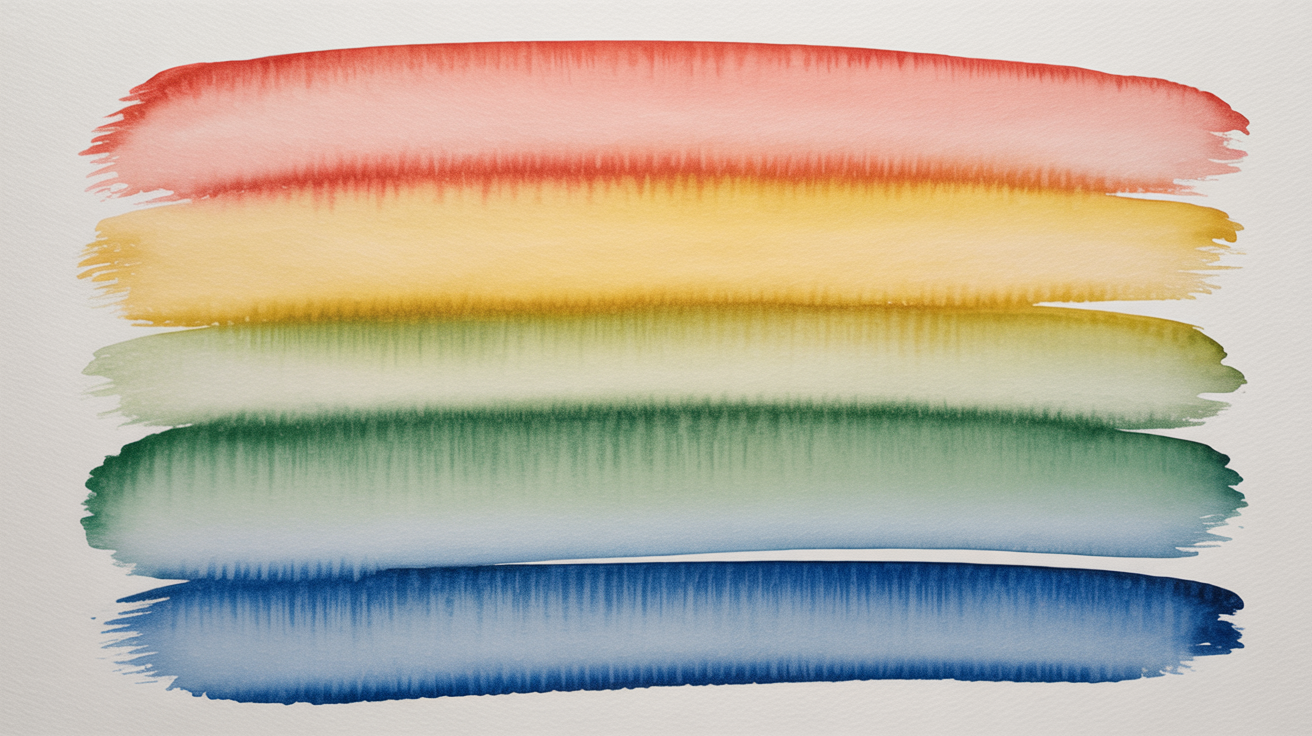
A graded wash (sometimes called a graduated wash or gradient wash) is one of the most useful skills in watercolor. It fades smoothly from dark to light, or from one color to clear water, across a stretch of paper. Master it and you can paint skies, water, shadows, and backgrounds that actually glow.
The technique sounds simple, but beginners often end up with streaks, tide marks, or a wash that suddenly goes pale and flat. This guide explains exactly what goes wrong and how to avoid it, with numbered steps you can follow the first time you try.
What you need before you start
Getting a smooth graded wash is mostly about preparation. Having everything in reach before you touch brush to paper makes a big difference.
- 140 lb (300 gsm) cold-press watercolor paper, taped to a board on all four sides
- A size 10 round brush (or a 1-inch flat brush, which some people find easier for large areas)
- Two jars of clean water
- A palette or a white ceramic plate for mixing
- One or two pigments, pre-mixed to a strong "coffee" consistency
Tilt your board. This is the single most important setup step. Rest your board on a book or box so it slopes toward you at about 10-15 degrees. Gravity does most of the blending work. Without tilt, paint sits flat and dries in uneven rings.
Pre-mix plenty of paint. Mix more than you think you need, at a stronger concentration than you expect to use. Running out of pigment mid-wash and stopping to remix is almost guaranteed to leave a hard edge you cannot fix.
How to paint a graded wash: step by step
This sequence takes a wash from dark at the top to light (near-clear water) at the bottom. Reverse it if you want the light area at the top.
-
Wet the paper first. Load your brush with plain water and stroke it across the entire area you want to wash. You want the surface uniformly damp but not pooling. This gives paint something to flow into and slows the drying time so you have room to work.
-
Load your brush with concentrated paint from the pre-mixed batch. Aim for a rich "coffee" consistency, darker than your finished goal because the wash will lighten as it dries (watercolor loses about 20-30% of its apparent value once dry).
-
Lay the first stroke across the top. Keep your brush at a low angle to the paper. Let the paint flow off the belly of the brush rather than scrubbing it on. A loaded round brush dragged sideways works well; so does a flat brush pulled straight across.
-
Let a bead form at the bottom of the stroke. You should see a small line of wet, shiny paint sitting along the lower edge of your stroke. This bead is your blending agent. Guard it: if it dries, you get a hard line.
-
Rinse your brush, load it with slightly diluted paint (add a little water to the mix on your palette), and lay the next stroke immediately below the first. Let the top edge of this stroke touch the bead from the stroke above. The bead will be absorbed and the two strokes will merge.
-
Continue down the paper, adding more water each time. Each successive stroke should be a little thinner (more water, less pigment). The bead keeps traveling down with you. Some people like to dip their brush in clean water between every stroke; others rinse it and load it from an increasingly diluted puddle on their palette. Both work. Find what gives you control.
-
Finish with pure water. The last one or two strokes can be plain water to carry the wash down to near-transparent. The gradient does not have to reach absolute zero, but the fade should be continuous.
-
Leave it alone. Tilt the board slightly more if paint is pooling at the bottom, but do not touch the wash while it is wet. Poking, patching, or adding more paint while the surface is drying creates blooms and backruns. Watercolor rewards patience here more than anywhere else.
Common mistakes and how to fix them
Streaks and hard edges between strokes. The most common cause is working too slowly. The bead dries before the next stroke arrives. Work faster, or re-wet the paper before you start. A slightly damp surface gives you more time.
The wash goes patchy in the middle. Usually caused by uneven moisture on the paper. Some areas dry before others and repel the incoming wash. Tape and tilt help. If it happens, let the whole thing dry completely, then decide whether to glaze over it or call it texture.
Pigment gathers at the bottom in a dark puddle. Your board is not tilted enough, or you mixed more water into the final strokes than the paper can absorb. Mop up the pool carefully with a just-damp (not wet) brush before it dries.
Pale, washed-out look. You likely started too light. Mix a richer initial wash, remembering that 20-30% lightening in drying. It feels scary to go dark, but graded washes almost always benefit from a bolder start.
Practicing this technique on scrap paper before committing to a painting you care about is genuinely worthwhile. Ten minutes of scrap practice will do more than re-reading any guide.
Choosing the right pigment for your wash
Some watercolor pigments grade beautifully; others are more difficult. Knowing the difference saves frustration.
| Pigment | Transparency | Notes for graded washes |
|---|---|---|
| Ultramarine blue | Transparent | Granulates slightly, which can add texture; grades well |
| Phthalo blue | Transparent | Very staining and strong; easy to overload; dilute heavily |
| Cerulean blue | Semi-transparent | Slightly granulating; lovely for skies |
| Raw sienna | Transparent | Gentle, easy to grade; good for warm backgrounds |
| Burnt sienna | Transparent | Rich and warm; one of the most forgiving washes |
| Yellow ochre | Semi-opaque | Dries chalkier than the above; requires more water |
| Quinacridone rose | Transparent | Incredibly smooth graduation; a pleasure to use |
| Payne's grey | Semi-transparent | Useful for neutral backgrounds; watch for granulation |
Transparent pigments generally grade more smoothly because they do not leave sediment as they dilute. Granulating pigments (ultramarine, cerulean) create a slightly textured, mottled effect that can be beautiful but is less predictable for beginners. Start with burnt sienna or quinacridone rose for your first few practice washes.
Using a graded wash in a painting
Once you have the technique, the places to use it open up fast.
A classic use is the sky in a landscape: dark blue or cerulean at the zenith, fading to near-white at the horizon. Flip the board so the horizon is at the top if you want the darker value there instead.
Graded washes also work for smooth cast shadows on simple objects. A sphere or a vase catches light on one side and fades through shadow on the other. A single graded wash in Payne's grey or a neutral mix can define the whole form without any overworking.
For a two-color gradient (say, a sunset going from quinacridone rose into ultramarine), the approach is almost the same. Load the first half of the wash with your first color, then switch to the second color and let them blend in the middle while both are still wet. This is sometimes called a variegated wash, and it is easier than it sounds if you work quickly and trust the wet-into-wet blending. You can read more about that approach in the guide to wet-on-wet watercolor and soft blends.
For contrast, it helps to understand when a completely even, flat coverage is better than a gradient. The guide to painting a flat wash step by step covers the differences and when to choose each approach.
Frequently asked questions
Why does my graded wash look smooth when wet but patchy when dry?
This is one of the most common beginner discoveries, and it is almost always caused by working back into the wash before it is fully dry. Even a slightly damp area that looks safe to touch is still mobile. Adding fresh paint or water into that zone pushes the pigment aside and leaves a ring or patch. Let the wash dry completely (you can speed this with a hair dryer held 30 cm away on a low setting) before judging or continuing.
Do I have to wet the paper first?
Not always. A dry-paper graded wash is faster but requires very quick brushwork and a confident, uninterrupted sequence of strokes. If you find that the bead keeps drying before you can work it, wetting the paper first (wet-on-wet) gives you more time and a softer result. Most beginners find pre-wetting the paper significantly easier.
What brush is best for a graded wash?
A large round brush (size 10 or 12) is the most versatile option because you can vary the pressure to control how much paint flows off. A 1-inch flat brush is faster for wide areas. Avoid small brushes for large washes; they run dry too fast and you end up with too many strokes, which increases the risk of lines.
Can I do a graded wash on dry paper that is already painted?
Yes. Once a layer is fully dry, you can lay a graded wash on top as a glaze. The dried paint beneath is locked in (as long as you used transparent or semi-transparent pigments), and the new wash will tint and unify it. This is a useful way to add atmosphere or correct values. The main risk is that heavy scrubbing with a loaded brush can lift the dried layer, so use a gentle, confident stroke rather than going back and forth.
My wash dries with a hard line at the bottom edge. What happened?
A hard line at the edge of a wash is called a "tide mark" or "bloom edge," and it forms when the wash dries while there is still a pool of liquid at the boundary. The pigment migrates to the drying edge and concentrates there. To prevent it: mop up any excess pool at the bottom of your wash with a just-damp brush before it dries, or continue the wash off the edge of the taped area so there is no closed boundary for pigment to collect against.