Materials & Tools
How to Carry Watercolor Supplies for Painting Outdoors
A practical gear guide for beginners: the minimum kit you need to paint outdoors, what to leave home, and how to handle wind, sun, and fast-drying paint.
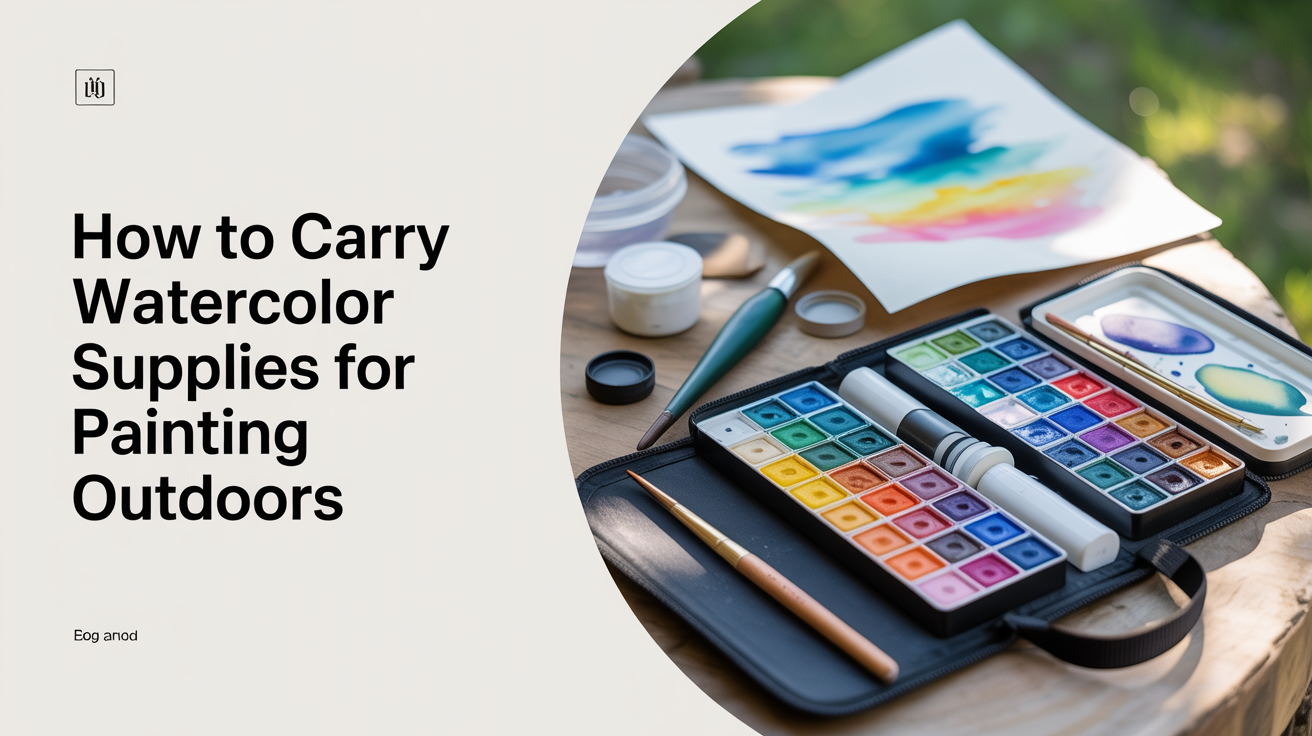
Painting outdoors with watercolor sounds romantic until you open your big studio bag, spill a water jar on your sketchbook, and spend the next ten minutes chasing a sheet of paper across the lawn. The fix is not better technique. It's a smaller kit.
This guide covers the minimum gear that actually works in the field, what to skip for now, and a short workflow for a 20-minute outdoor sketch.
The Minimum Kit
You need five things:
A travel palette. A pocket travel palette holds enough paint to paint almost anything. Look for one with a mixing area on the lid and wells that are deep enough to squeeze tube paint into rather than relying on hard pans alone. Half-pan size is the outdoor standard: the palette fits in a jacket pocket and the mixing area is large enough for a thumbnail wash.
Two or three brushes. One medium round (size 8 or 10), one small round (size 4 or 6), and optionally a flat wash brush. That covers flat washes, detail work, and everything in between. More than three brushes in the field means more brushes to lose or break.
A single water container. A collapsible silicone cup takes up almost no space and holds enough water for a full session. Some painters use a small plastic jam jar, which also works. One container is enough if you change the water when it turns murky.
A watercolor block or a rigid support. Loose sheets of watercolor paper outdoors are a problem: wind moves them, they curl when wet, and you need a free hand to hold them down. A watercolor block solves this. Sheets are glued on all four edges so the paper stays flat while wet, and you do not need clips or a board. Alternatively, tape paper to a piece of hardboard and use bulldog clips for extra security. Either way, a rigid surface under your paper is not optional outdoors.
For more on paper types and why surface texture matters, see this guide to cold-press, hot-press, and rough paper.
A spray bottle. A small travel spray bottle keeps paint in your palette from drying out too fast in sun or wind. One spritz every few minutes is usually enough.
That is the whole list. You can add a stool, a hat, and sunscreen, but those are comfort items, not painting items.
Pocket Palette vs. Full Pan Set
A pocket travel palette typically holds 12 to 24 half-pans and fits in a shirt pocket. A full pan set often holds 24 to 48 full pans in a tin that can weigh over a kilogram.
For outdoor painting, the pocket palette wins on almost every count. It weighs under 100 grams, opens flat, and gives you a mixing lid. The full pan tin is heavier, awkward to hold in one hand, and often has a mixing area that is too small for a proper wash.
The one trade-off with pocket palettes is pan depth. Shallow wells mean tube paint runs short quickly. The fix: every few sessions, squeeze fresh tube paint on top of the dried-in paint. This rehydrates the whole thing and keeps your colors clean.
If you want a tested set recommendation that covers both outdoor and studio use, the beginner starter kit guide has specific options at different price points.
Dealing With Wind, Sun, and Fast-Drying Paint
Wind. Wind dries paint faster than you expect and can lift loose paper off your board mid-stroke. Use a watercolor block or clip paper to a rigid board. Weight your bag on the ground behind your easel or stool. Keep brushes not in use capped or laying flat in a brush roll so they do not blow away.
Direct sunlight. Sitting in direct sun creates two problems. Your eyes have trouble reading the value relationships in your painting (shadows look darker and lights look blown out compared to what they actually are), and paint in your palette dries out in minutes. Work in the shade when you can, even if the subject is in the sun. A wide-brimmed hat helps if shade is not available. Spray your palette more often in sun.
Fast-drying paint. Outdoors, paint dries roughly twice as fast as it does inside. This affects wet-in-wet work: you have a shorter window before the paper reaches a damp stage where adding more wet paint causes blooms you did not plan for. Adjust by pre-wetting only the area you are about to paint, mixing a larger puddle of color than you think you need so you are not stopping to remix mid-wash, and working smaller. A 10cm subject painted outdoors will behave more reliably than a full-page composition.
A 20-Minute Outdoor Sketch Workflow
A structured short session is better practice than an open-ended one. Here is a workflow that fits into a lunch break:
Minutes 1 to 3: Set up and look. Unpack your kit. Find a comfortable seated position with the sun not directly in your eyes. Look at the scene for two full minutes before touching the palette. Squint to simplify the values. Pick one focal point.
Minutes 4 to 6: Light pencil sketch. Block in the main shapes with a light pencil line. Do not detail anything. The line is a road map, not the final image.
Minutes 7 to 14: First washes. Wet the sky or background area and drop in your lightest values first. Let that dry or move to a non-adjacent area while it dries. Work large to small.
Minutes 15 to 18: Darker values and detail. Add your mid-tones and then the darkest accents. Keep these areas small. In watercolor, the darks are the last thing you add and the smallest in area.
Minutes 19 to 20: Stop. Put the brush down. Beginners almost always overwork an outdoor sketch in the final minutes. If the paint is still wet, wait. If it is dry, you can reassess, but often the looser version you have is better than the tightened-up one you plan.
For more on choosing brushes that handle this kind of quick, loose work, see this breakdown of first brushes for watercolor.
What to Leave Home
A few things sound useful outdoors but mostly create problems:
Large water containers. A full-size water jar tips over, weighs your bag down, and takes up table space you do not have on a small folding stool or your lap.
Your full color range. More than eight to ten colors outdoors is rarely necessary and slows your decision-making. Restrict yourself to a small travel palette and mix what you need.
Expensive or delicate brushes. Outdoors means grass, gravel, and the occasional drop. Keep your best brushes in the studio for now and use mid-range rounds outside until you are comfortable with the setting.
A folding easel. Useful eventually, but for a beginner it adds setup time and one more thing to think about. A clipboard or watercolor block held on your lap or rested against a bag is simpler.
Frequently Asked Questions
Do I need a special watercolor paper for outdoor use? No special paper, but you do need paper that is heavy enough not to warp badly when wet. 300gsm (140lb) paper is the standard. Anything lighter will buckle, which is especially disruptive outdoors where you cannot tape all four edges to a flat surface as easily as you can in a studio. A watercolor block handles the buckling problem by keeping the sheet bound on all sides until it dries.
Can I use a regular spiral sketchbook outdoors? You can, but most spiral sketchbooks use paper that is too light for watercolor washes. The paper will buckle, and the paint will sit on the surface rather than absorbing well. A dedicated watercolor sketchbook with paper rated at least 200gsm is a better choice. Watercolor blocks are better still for outdoor sessions.
How do I keep my brushes clean between colors outdoors with only one water container? Rinse thoroughly, then wipe on a folded piece of cloth or an old kitchen towel before picking up the next color. If the water turns very muddy, replace it. One container is enough if you stay on top of this. Many outdoor painters carry a small hand towel clipped to their bag specifically for brush wiping.
Is a folding stool necessary? Not necessary, but it helps. Painting while standing is tiring and makes it hard to hold a palette steady. Painting while sitting on the ground puts your work at an odd angle and is uncomfortable for longer sessions. A lightweight camping stool costs very little and makes the whole session easier.
What do I do if my paint dries in the palette between sessions? Dried watercolor paint in a palette is not ruined. Mist it with water from your spray bottle a few minutes before you start and it will rehydrate. This is one reason tube paint squeezed into a travel palette works so well outdoors: the same paint you would use in the studio works exactly the same way once you reactivate it with water.