Materials & Tools
Do You Need a Watercolor Palette? Setting One Up and Keeping It Clean
Learn how to set up a watercolor palette for beginners: which type to choose, how to arrange your colors, and how to keep it clean between sessions.
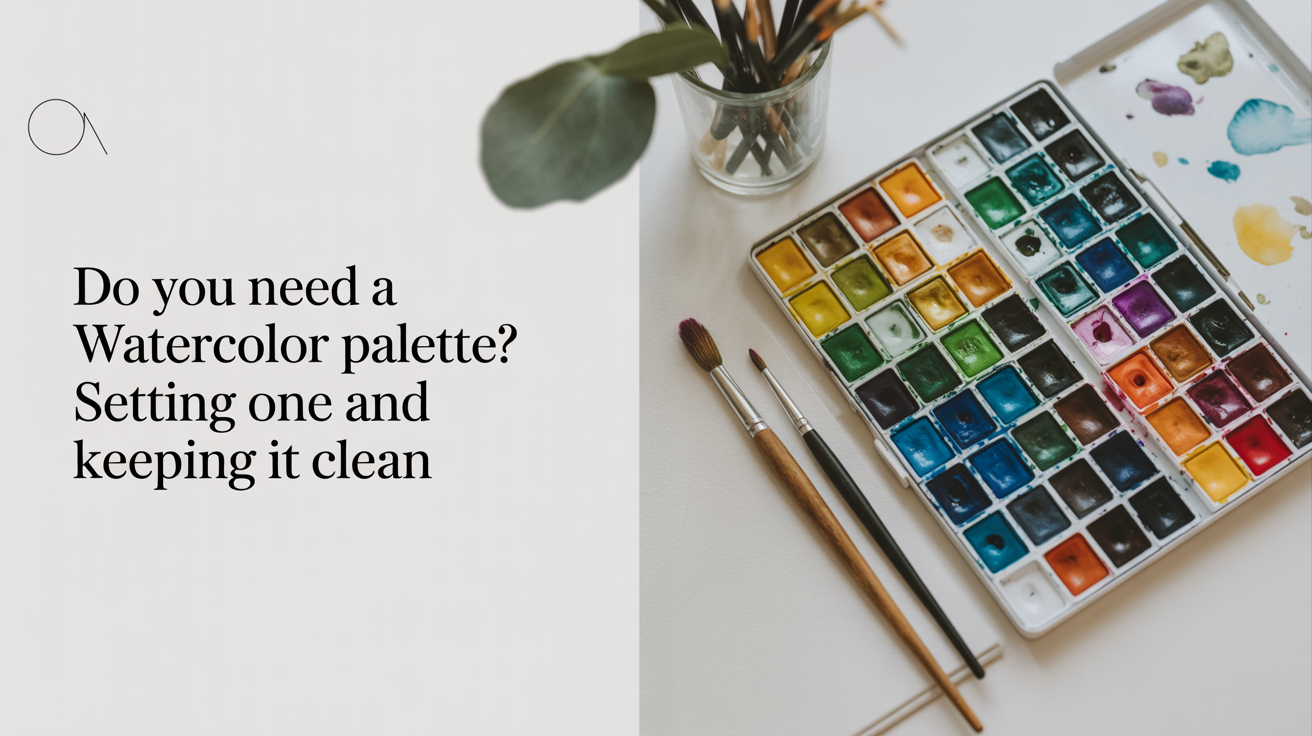
A palette is one of those purchases that feels minor compared to paints and paper, but it shapes how you work every single session. Get it right and mixing feels natural. Get it wrong and you spend half your painting time chasing dirty color or running out of room. This guide walks through choosing a palette, arranging it sensibly, and keeping it usable over time.
Do You Actually Need a Dedicated Palette?
Technically, no. A white ceramic dinner plate, the back of an old tile, or any smooth white surface will work in a pinch. White is non-negotiable because you need to see your colors accurately, and anything with texture makes mixing gritty.
That said, a purpose-made palette is worth getting early because:
- Wells hold water. Recessed mixing areas let you build up puddles without color running off the edge.
- Lids seal dried paint. Many palettes close up, which keeps pan watercolors from cracking between sessions and keeps tube paint viable for days.
- They stay put. A palette with a thumb hole or rubber feet doesn't slide around while you're working.
For tube paints especially, a palette with at least six deep mixing wells matters more than you might expect. Shallow plates don't hold enough water to mix a proper wash.
Choosing Between Palette Types
There are three main formats, each suited to a slightly different setup.
| Type | Best for | Drawbacks |
|---|---|---|
| Plastic folding palette | Beginners with tube paints | Stains over time, paint beads on cheap plastic |
| Porcelain/ceramic palette | Studio work, accurate color | Heavy, breaks if dropped |
| Pan palette (travel tin) | Painting on location | Less mixing room, limited to pre-loaded pans |
A plastic folding palette with around 20 small wells along the sides and a large flat mixing area in the center is a sensible starting point. Look for one made from thick, slightly matte plastic rather than shiny white plastic. Paint tends to bead and roll on slick surfaces, making puddles hard to control.
If you are using pan or tube paints, the palette type matters. Pan painters often use a metal travel tin with the pans already slotted in, while tube painters need more room to squeeze out fresh color and mix large puddles.
How to Arrange Your Colors
There is no single correct arrangement, but there is a logic that makes mixing faster and keeps colors cleaner.
Start with a warm-to-cool progression. Place your colors around the outer wells moving from yellows, through oranges and reds, into violets and blues, then greens. This keeps adjacent colors harmonious and makes it easier to pick up a neighbor when you want a subtle blend.
A simple starter arrangement for six colors:
- Lemon yellow (cool yellow)
- Cadmium yellow hue or hansa yellow (warm yellow)
- Cadmium red hue or pyrrol scarlet (warm red)
- Alizarin crimson or quinacridone magenta (cool red)
- Ultramarine blue (warm blue)
- Phthalo blue or cerulean (cool blue)
Once you add more pigments, greens typically sit between blue and yellow. Earth tones like raw sienna and burnt sienna can anchor one end of the layout as warm neutrals.
Leave your center wells empty. The large mixing area is for mixing, not for squeezing out color. The more open space you have there, the easier it is to build a big clean wash without accidentally picking up a leftover tint from a previous session.
The brushes you use affect how much palette space you need. A large mop brush that holds a lot of water needs a correspondingly large puddle, so generous mixing wells matter.
Loading Tube Paint Onto a Palette
When you first set up a palette with tube paints, squeeze a small ribbon of color into each well. You do not need much: a centimeter or two is enough to last several sessions. The goal is to let the paint dry in place so it forms a semi-permanent cake you can reactivate with a wet brush.
Once the paint is dry:
- Mist the wells with a few drops of water before you start painting and let it sit for a minute. The paint will soften without becoming muddy.
- Mix in the center area, not in the wells. Digging into the well to mix contaminates your supply color.
- Leave leftover mixed color in the center. You can reactivate it next time if it matches what you need.
If you notice your paint beading up rather than sitting flat, dab the well with a cotton ball and a small amount of rubbing alcohol to remove any manufacturing release agent, then reload.
Keeping Your Palette Clean
A dirty palette affects every color you mix. Here is a simple maintenance routine.
After each session:
- Leave tube paint in the wells. Do not rinse it out. Dried watercolor reactivates easily and lasts for months.
- Wipe the mixing area with a damp cloth or paper towel while the paint is still wet. Once it dries in a muddy mess it is harder to remove cleanly.
- If you are closing a lidded palette, let the paint dry first before snapping it shut. Wet paint pressed against the lid transfers and creates cross-contamination.
When the mixing area gets too stained:
Fill the palette with a shallow layer of water and let it soak for ten minutes. Dried watercolor dissolves easily. A soft toothbrush works well for scrubbing the corners of wells without scratching the surface.
When a color well gets contaminated:
A single brushstroke of a dark color dragged into a yellow well can ruin that paint. Let everything dry, then use a damp cotton swab to lift the contaminating color from the top layer. If the stain goes deeper, it is usually easier to accept a slightly dirty yellow and compensate in the mix than to try scrubbing out the well completely.
The paper you work on also affects how much palette space you need. Rough paper absorbs color quickly and rewards loaded brushes, which means bigger puddles and more mixing room.
Frequently Asked Questions
Do I need an expensive palette to start?
No. A basic folding plastic palette from any art supply store in the $8-15 range works fine for beginners. The main thing is white mixing surfaces and enough wells to keep colors separate. Upgrade to porcelain once you know your working habits.
Can I use the same palette for pan and tube watercolors?
Yes. Pan palettes often have slots for pans on one side and open mixing wells on the other. You can mix fresh tube paint directly into the mixing area alongside reactivated pan colors. They behave the same once wet.
My paint keeps drying out mid-session. What helps?
Mist the entire palette with a small spray bottle every twenty minutes or so during a long painting session. In dry climates or in air conditioning, watercolor desiccates faster than expected. A palette that closes also helps: snap it shut during breaks to slow evaporation.
How many colors should I load on a starter palette?
Six to ten is a practical range. More colors than that can feel overwhelming and makes it easy to reach for a pre-mixed color rather than learning to mix it yourself. A limited palette builds color-mixing skill faster.
Is it okay to mix different brands in the same palette?
Completely fine. Watercolor behaves consistently across brands once it is in the mixing well. The only thing to watch is granulation: some pigments from certain brands granulate more heavily than others, which can create unexpected texture in a mix. Once you notice which pigments do this, you can use it intentionally.