Subjects & Projects
An Easy Watercolor Still Life for Beginners
Learn how to paint a watercolor still life using fruit and simple objects. Step-by-step guidance for beginners, no art degree required.
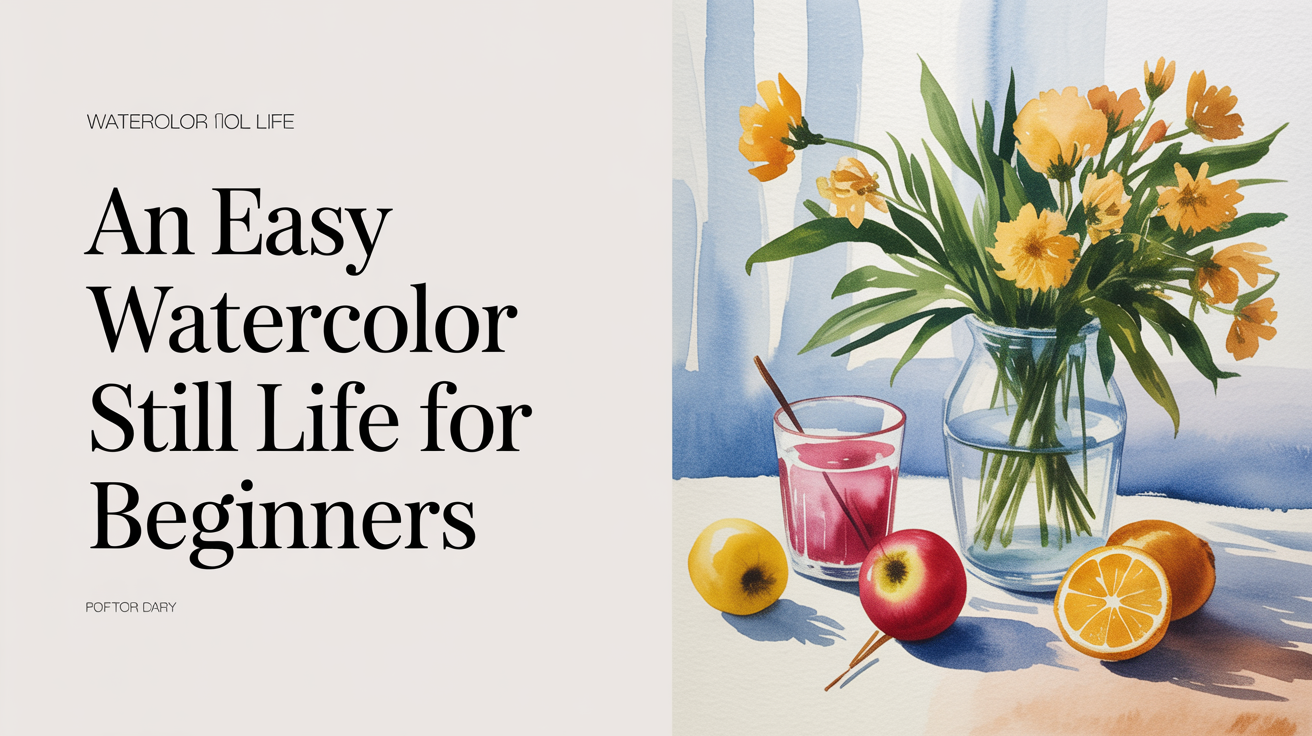
A still life is one of the best first subjects in watercolor. You control the arrangement, the lighting, and the pace. Nothing moves, nothing changes, and you can glance at it as many times as you need. For beginners, that kind of patience from your subject is worth a lot.
This guide walks you through a simple watercolor fruit still life: how to pick objects, set them up, sketch lightly, and paint in stages. The whole session fits comfortably on a weekend afternoon.
What to Gather Before You Start
You do not need a large collection of objects. Two or three items work better for a first attempt than a crowded arrangement. Too many shapes competing for attention makes composition harder and can slow you down when you want to build momentum.
Good objects to start with:
- A lemon or orange (round, one strong colour, easy shadow)
- A single apple or pear (slightly more complex shape, but still manageable)
- A small cup, jar, or bowl as a second element
- A piece of cloth or a folded napkin for the surface
Place your objects on a table near a window. Natural light from one side creates clear shadows and makes the forms easier to read. Avoid overhead lighting or multiple light sources at first as they flatten the shadows and make value decisions harder.
For materials, you need a small palette of three to six colours, a round brush in size 6 or 8, cold-press watercolor paper (at least 140 lb / 300 gsm), and two jars of water. A light pencil and an eraser round out the list.
How to Sketch Your Still Life
Keep the pencil sketch minimal. Mark the outline of each object, draw a horizontal line for the edge of the surface they sit on, and note roughly where the cast shadows fall. Do not shade with pencil. Watercolor sits on top of pencil marks and the graphite sometimes shows through pale washes, so less is better.
For placement on the page, leave a margin on all sides and avoid centering everything dead in the middle. Try positioning the tallest object slightly off-center to the left or right. Overlap at least two of your objects so there is a sense of depth in the arrangement.
If proportions feel tricky, hold your pencil at arm's length and use it to measure: how tall is the apple compared to the cup? Is the lemon roughly half the height of the jar? These comparisons give you something to check against rather than guessing.
Painting in Layers: Light to Dark
Watercolor builds from light to dark, and a still life lets you practice that discipline in a controlled way. You are not chasing light that shifts across a landscape or waiting for a flower to stop swaying.
First wash (lightest tones): Mix a pale version of each object's colour and apply it across the whole form, leaving the brightest highlight area unpainted. This does not need to be even. A slight variation in tone at this stage gives the painting more life than a flat coat.
Let the first wash dry before moving on. Touch the surface near your painting, not the painting itself, to check. If it feels cool at all, give it another minute.
Second wash (mid-tones): Rewet your brush, mix a slightly stronger version of the same colour, and apply it to the shadow side of each form. Leave the first wash showing on the lit side. Where the two washes meet while damp, let them blend softly. Where you want a harder edge, wait for the first layer to dry fully before adding the second.
Third wash and cast shadows: The deepest tones in a still life are usually the cast shadows on the surface and the reflected darks where one object sits against another. Mix a warm grey or a darker version of the shadow colour and paint those shapes as simple flat areas first. Then soften the edge nearest the object with a damp brush while the paint is still wet.
Mixing Colours for Common Still Life Objects
A watercolor fruit still life does not require many pigments. A small palette is easier to manage and produces cleaner mixes.
| Object | Useful pigments | Shadow mix |
|---|---|---|
| Lemon | Lemon yellow, hansa yellow | Yellow + a touch of violet or raw umber |
| Orange | Cadmium orange or pyrrol orange | Orange + ultramarine blue |
| Red apple | Pyrrol red or scarlet | Red + sap green or viridian |
| Green apple | Sap green or phthalo green | Green + burnt sienna |
| Pear | Yellow ochre + lemon yellow | Ochre + raw umber |
For the surface shadows, a mix of ultramarine blue and burnt sienna gives a warm neutral that can lean warmer or cooler depending on which pigment you add more of. This is a flexible mixing pair worth knowing for still life work.
Backgrounds: Leave It or Wash It
A common question in beginner still life painting is whether to paint the background. Both approaches work, and the choice affects the mood of the finished piece.
Leaving the background as white paper produces a clean, graphic result. The objects stand on their own and the focus stays sharp. If you go this route, make sure your edges around the objects are deliberate, not accidental.
A background wash pushes the objects forward and can add atmosphere. Wet the background area with clean water first, then drop in a pale neutral (a grey-blue or a warm tan works well), working carefully around the edges of your objects. Because this is wet-in-wet, the colour will spread unevenly in a soft way. That soft quality suits still life backgrounds well.
You might find the wet-in-wet approach for skies useful here too. The same loose technique covered in how to paint a simple watercolor sky and clouds applies directly to painting soft background areas behind objects.
Finishing Touches
Once the main washes are dry, look at your painting from a short distance. Squint slightly. The areas that seem to disappear into a flat tone are where you may want to add a little definition. A small, darker stroke along the bottom edge of an apple or along the rim of a cup can sharpen the sense of form without overworking the surface.
Check the cast shadows. They are often the most underworked part of a beginner still life. A shadow that is too pale makes objects look as though they are floating. Darken them if needed, painting over the dry wash with another layer.
Avoid going back into areas that already feel finished. Watercolor surfaces can lift when you rewet them, and multiple passes in the same area tend to muddy the colour. Trust the earlier washes and leave them.
Once you are comfortable painting from objects, you might enjoy working from observation on other subjects. The loose approach used in loose watercolor flowers: an easy first project builds on the same light-to-dark layering used here. And for adding a sky to a scene that includes a still-life arrangement in a window, how to paint a watercolor sunset for beginners covers warm-to-cool gradients you can carry into any background.
Frequently Asked Questions
What is the easiest still life to paint in watercolor?
A single piece of fruit on a plain surface is hard to beat for a first attempt. A lemon works particularly well because the colour is consistent, the form is round and clear, and the shadow has a warm-to-cool shift you can practice. Once that feels manageable, add a second object and a simple cloth beneath them.
Do I need to transfer a drawing before painting?
No. A light freehand pencil sketch directly on the watercolor paper is the simplest method. Keep the lines loose and avoid pressing hard. If you want a more accurate outline, you can sketch on regular paper first, then trace the basic shapes lightly onto your watercolor paper using a window or a light pad.
How do I keep my colours from getting muddy in a still life?
The main causes of muddy colour are mixing too many pigments together, painting into wet washes without waiting for them to dry, and overworking the surface. Limit each mix to two or three pigments, clean your brush between colours, and let layers dry fully before adding the next. Keeping two water jars and changing them regularly also helps keep your mixes clean.
Should I paint the darkest shadows last?
Yes, in most cases. Start with the lightest tones and build toward the darkest. Cast shadows on the surface are usually the darkest element in a still life and are best added toward the end, once you can see how the full range of values is developing.
How long does a beginner watercolor still life take to paint?
A simple two or three object arrangement usually takes between one and two hours, including drying time between layers. If you rush the drying time, colours will mix together in ways you did not plan. Building in breaks to let washes dry is part of the process, not a delay.