Color & Mixing
How to Mix Rich Browns and Warm Earth Tones in Watercolor
Mixing brown watercolor from complementary pairs instead of tube earth colors, with a simple chart for warm, neutral, and cool browns.
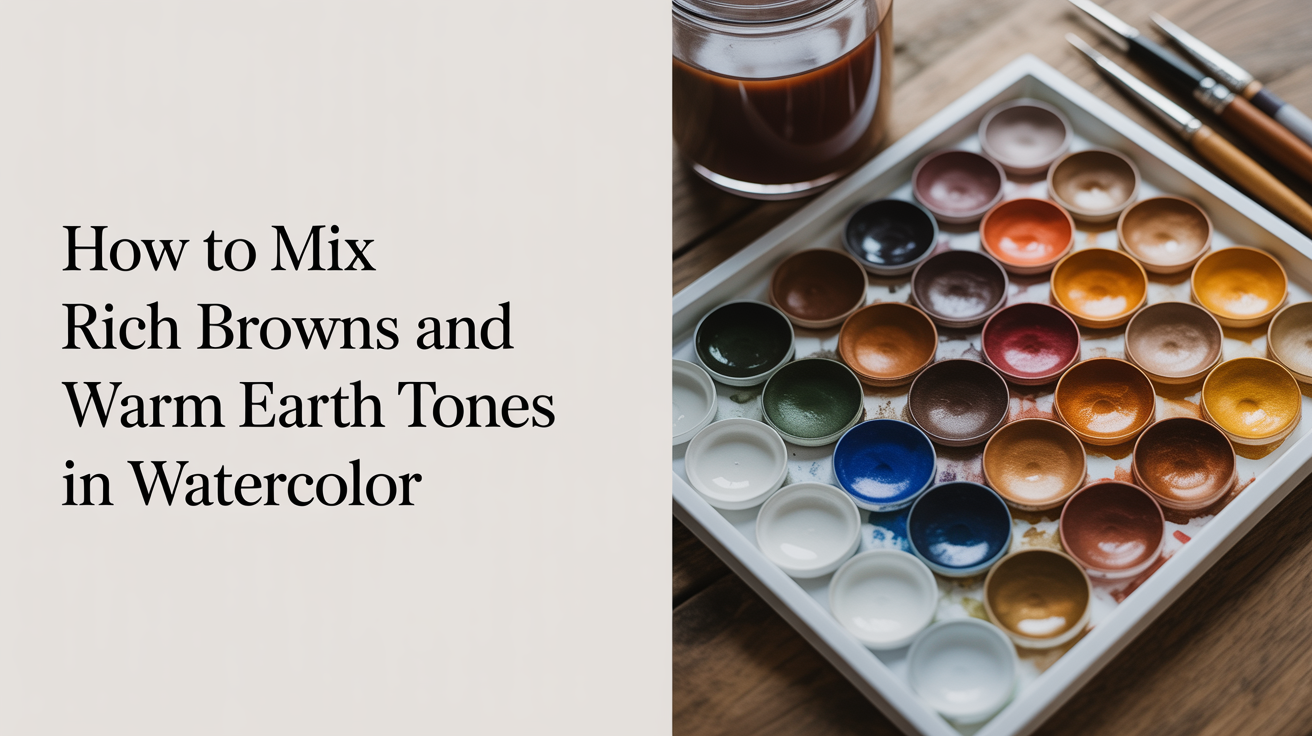
Mixing brown watercolor from your own palette is one of those skills that looks small until you actually need it, and then it shows up everywhere: bark, soil, an old wooden chair, the shadow side of a dog's coat. If your browns keep landing somewhere between traffic-cone orange and dishwater grey, you are not missing a special tube of paint. You are missing a system, and the system is simpler than it looks.
Why Your Browns Keep Going Wrong
Brown is not a primary color and it is not really a single hue at all. It is what happens when you push a warm color and a cool color toward each other until neither one wins. Orange goes brown when you dull it. Grey goes brown when you warm it up. The problem most beginners run into is that they either stop too early, so the mix is still obviously orange, or they overcorrect and dump in so much of the opposite color that the warmth disappears and they are left with a flat, lifeless grey.
The fix is a habit more than a recipe: mix a small amount first, test it on scrap paper, and nudge it one drop at a time. Watercolor also dries lighter and cooler than it looks when wet, so a brown that looks perfect in the mixing well can look muddy or ashy once it dries. Let a test swatch dry before deciding it needs more warmth or more grey.
The Complementary Pairs Behind Every Good Brown
Every believable brown starts from a complementary pair: a warm color (a red or an orange) mixed with its rough opposite (a blue or a green). Complementary pairs neutralize each other's brightness without cancelling out completely, and that partial neutralizing is exactly what brown is. Push the ratio toward the warm color and you get an orange-leaning brown. Push it toward the cool color and you get a colder, more muted one.
A few pairings worth knowing:
- A warm red plus a green gives you a brown that leans toward chestnut or rust, since the red is doing most of the talking.
- An orange plus a blue gives a rounder, more classic brown, closer to what you would picture as "brown" without qualification.
- A warm yellow plus a violet or a red-violet gives a softer, more golden brown, useful for straw, dry grass, or pale wood.
None of this requires a brown pigment at all. It is the same warm-and-cool logic that governs mixing natural greens in watercolor without mud, just aimed at a different neutral. If that idea of two opposites cancelling each other out is new to you, it is worth backing up to the mixing idea that changes everything before you go further with brown, because the same logic runs underneath greys too.
Why Mixed Browns Behave Differently From Tube Earth Colors
It is worth being honest about the difference between a brown you mix yourself and a brown that comes straight from the tube, like burnt sienna, burnt umber, or raw umber. These pigments are earths (some literally ground from iron-oxide-rich clay), and they behave in ways a mixed color usually cannot fully copy.
Tube earths tend to be more opaque, or at least less transparent, than a fresh mix of two transparent pigments. Several of them also granulate, meaning the pigment particles settle unevenly into the paper's texture and leave a slightly grainy, mottled look instead of a flat, smooth field of color. That granulation is often exactly what you want for bark, rock, or soil, since real dirt and old wood are not smooth either.
A mixed brown, by contrast, usually stays smoother and more transparent, useful when you want it to sit quietly under other colors or glaze over it later without turning muddy. Neither approach is better. Reach for a tube earth when you want texture and opacity in one step, and mix your own when you want a specific warm or cool lean that a single pigment cannot give you.
A Small Mixing Chart to Start From
Treat this as a starting point, not a formula to follow exactly. Every brand's red, blue, and green will shift the result a little, so use your own paints and adjust the ratio by eye.
| Warm color | Cool color | Ratio (warm : cool) | Resulting brown family |
|---|---|---|---|
| Warm red (like a pyrrole or cadmium-hue red) | Phthalo or sap green | 2 : 1 | Warm, rust-leaning brown |
| Orange (or red + yellow mixed fresh) | Ultramarine blue | 1 : 1, then adjust | Neutral, all-purpose brown |
| Yellow ochre or a warm yellow | Dioxazine violet or a red-violet | 3 : 1 | Cool-soft, golden-grey brown |
Start with more water and less pigment than you think you need. It is far easier to add a touch more of the cool color to a brown that reads too orange than it is to rescue a mix that has already tipped into grey.
Where Browns Actually Show Up in Your Paintings
Once you have a couple of these mixes under your belt, you will notice brown everywhere in this niche's usual subjects.
Tree bark rarely needs a flat, even brown. Mix a middle brown from the orange-and-blue pair, then drop in small extra touches of the warm color while the wash is still damp so ridges and knots read as slightly warmer patches rather than one uniform slab.
Soil and dirt paths usually want a cooler, greyer brown, closer to the yellow-and-violet mix, especially in shadow. Wet soil reads cooler and darker than dry soil, so keep a slightly bluer version of your brown ready for the parts that look damp.
Wooden objects, like a chair, a fence, or a picture frame, benefit from the more transparent mixed brown rather than a flat tube earth, since you can glaze a second warm or cool layer over it once dry to suggest grain and worn edges.
Animal fur is one of the trickiest, since real fur is almost never one brown. Lay down a base of the neutral orange-and-blue mix, then while it is still damp, touch in small strokes of the warmer red-and-green version where light catches, and the cooler yellow-and-violet version in the recesses. The variation reads as fur far more convincingly than a single flat brown.
A Quick Troubleshooting Pass
If your brown still is not landing, work through these in order rather than guessing:
- Too orange? Add the smallest possible touch of the complementary cool color and re-test on dry paper, since wet color always looks warmer than dry.
- Too grey or lifeless? You have overcorrected. Add a touch of the warm color back in, and stop half a step earlier next time. If a soft grey is actually what you wanted, see mixing realistic greys and neutrals for that side of the same idea.
- Muddy rather than rich? Usually a water problem, not a color one. Thin the mix slightly and let more of the paper's white show through the strokes.
- Different every time? Mix a bigger batch than you need in a mixing well so you are not remixing mid-painting, and note the ratio down so you can find it again.
Once you can move confidently between a warm rust brown, a neutral all-purpose brown, and a cool golden-grey brown, from the same handful of tube colors, you will reach for premixed earth pigments only when you specifically want their texture, not because mixing your own brown ever failed you.
Frequently Asked Questions
Can I mix brown from just red, yellow, and blue?
Yes. Mixing all three primaries in roughly equal but not identical amounts produces a brown or a warm grey, since you are combining a warm color with something close to its complementary mix. The exact result depends on which red, yellow, and blue you use, so test on scrap paper first.
Is burnt sienna a mixed color or a single pigment?
Burnt sienna is typically a single earth pigment, though many brands also sell "hue" versions blended from other pigments to imitate its color. A true single-pigment burnt sienna is usually semi-transparent and can granulate slightly, part of why painters like it for bark, rock, and soil.
Why does my brown look fine wet but muddy once it dries?
Watercolor dries lighter and often slightly cooler than it appears while wet, an effect sometimes called dry-back. A brown that looked rich and warm in the mixing well can dry looking duller or greyer. Always test a small swatch and let it dry completely before deciding a mix needs adjusting.
What is the fastest way to get a warm brown for tree trunks?
Start with the warm red and green pairing at roughly two parts red to one part green, using a smooth to slightly textured wash. It leans warm by default, which suits most bark, and you can always cool a small area afterward with a touch of the blue-and-orange mix while it is still damp.
Do I need a dedicated brown paint if I can mix my own?
Not strictly, and many painters build a limited palette without one. That said, a tube earth pigment like burnt umber or raw sienna is worth having for its particular granulation or opacity in a single step, especially on rocky or heavily textured subjects. Mixing your own brown is about flexibility, not about avoiding earth pigments altogether.