Color & Mixing
How to Mix Natural Greens in Watercolor Without Mud
Learn how to mix green watercolor that looks fresh and natural, not muddy, using blue and yellow combos any beginner can master.
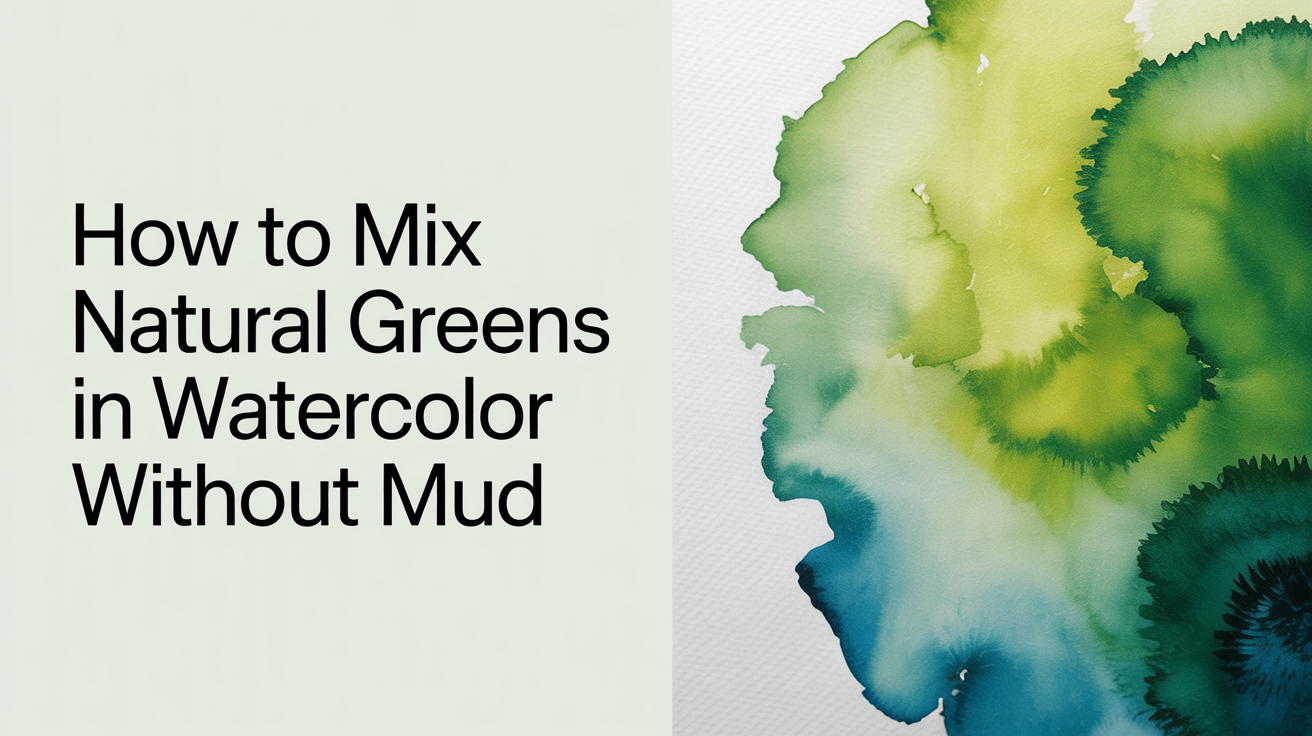
Green is the color most beginners struggle with. Tube greens like sap green or hooker's green can look flat, and homemade greens often turn out brownish and sad. The good news: once you understand which blues and yellows to reach for, mixing natural-looking greens is straightforward and actually pretty fun.
This guide will show you how to mix green watercolor across a full range, from pale spring yellow-greens to deep forest shadows, without ever landing in the mud.
Why greens go muddy in the first place
Mud happens when you accidentally introduce a third primary color into your mix. Green is already blue plus yellow. When you add a touch of red (even a tiny amount hiding inside your blue or yellow), the mix starts neutralizing toward brown or gray.
The fix is to pay attention to the undertones of your paints. Every blue and yellow leans either warm (toward red and orange) or cool (toward the opposite end of the spectrum). Mixing a warm blue with a warm yellow sounds fine in theory, but if those warm leanings both contain traces of red, you get a muddy result.
The safest greens come from mixing a cool yellow with a cool blue, so neither carries a red undertone into the mix. That single insight solves most beginner green problems. For more on how warm and cool primaries interact, see warm and cool primaries: the mixing idea that changes everything.
The best blue and yellow combinations for mixing green
Here is a practical mixing table covering the most common beginner pigments. All ratios are starting points, not exact rules. Adjust the blue-to-yellow balance to shift the green lighter, darker, or more blue-green versus yellow-green.
| Blue | Yellow | Result | Notes |
|---|---|---|---|
| Phthalo blue (green shade) | Hansa yellow medium | Intense lime to mid-green | Very strong; use a little phthalo, lots of yellow |
| Phthalo blue (green shade) | Yellow ochre | Muted, earthy olive green | Good for foliage in shadow |
| Ultramarine blue | Hansa yellow medium | Fresh mid-green | Ultramarine has a faint red lean; greens can go slightly warm |
| Ultramarine blue | Yellow ochre | Warm, slightly dulled green | Good for grass in afternoon light |
| Cerulean blue | Hansa yellow light | Pale, cool spring green | Cerulean granulates; lovely texture for distant leaves |
| Cerulean blue | Raw sienna | Muted sage green | Useful for natural, subdued foliage |
Phthalo blue (green shade) is arguably the most powerful green-mixing blue you can own. A tiny amount goes a long way, so start with more yellow and add phthalo a brushstroke at a time.
How to actually mix on the palette
Set up two water jars and a ceramic palette or a butcher tray. Wet your palette wells first so the paint flows freely.
Start with your yellow. Load a size 8 round with a generous amount of hansa yellow (or whichever yellow you are using) and pool it in a clean well. Add a small stroke of your blue into that pool and stir. The yellow-to-blue ratio for most natural greens is roughly 3:1 or 4:1 at first. You can always add more blue, but you cannot easily remove it once it is in.
Test the mix on scrap 140 lb (300 gsm) cold-press paper and let it dry. Watercolor dries 20 to 30% lighter than it looks wet, so your green may end up paler than expected. Adjust and test again.
For a range of greens from one mix session, start with a large pale puddle and pull portions into separate wells. Darken one well with more blue, warm another with a touch of raw sienna, and cool a third with an extra drop of phthalo. Now you have three related greens that will look harmonious on the same painting.
Building a natural green palette from just a few pigments
You do not need a separate tube of paint for every green in nature. A handful of mixing pigments will cover most of what you encounter:
- Phthalo blue (green shade) for bright, clear greens
- Ultramarine blue for slightly warmer, richer greens
- Cerulean for soft, granulating texture in pale greens
- Hansa yellow medium or hansa yellow light as your primary yellow
- Yellow ochre for dulling greens and pushing them toward olive or sage
- Raw sienna for warm, earthy undertones in foliage shadows
- A touch of burnt sienna to neutralize any green that needs to look dead, dry, or in deep shade
Notice that sap green is not on that list. It is a useful convenience pigment, but learning to mix your own greens teaches you far more and gives you more control. Once you can mix confidently, you can use sap green as a starting point and push it warmer or cooler instead of using it straight out of the tube.
For advice on keeping your kit small and flexible, the guide on how to build a limited watercolor palette and why it helps walks through the logic in detail.
Adjusting greens once they are on paper
Sometimes you mix a fine green on the palette and it lands on the paper looking too bright or too cold. Here is how to correct it without scrubbing and making a mess.
To warm a green, drop in a tiny amount of raw sienna or yellow ochre while the wash is still wet. Tilt the paper slightly so the warm color flows into the cool green naturally.
To dull a green, add a tiny touch of its complement. Red is the complement of green, but using red directly can go muddy fast. A safer approach is to use burnt sienna (which is a red-orange) sparingly. It neutralizes the green without turning it brown as quickly.
To deepen a green for shadows, add more of your blue rather than adding black. Black tends to deaden watercolor mixes. A deep green made from phthalo blue with just enough yellow to stay green is far richer than any green mixed with black.
Let each layer dry fully before adding another. Watercolor green can look uneven when wet and settle into something lovely once dry, so resist the urge to fiddle.
Common beginner mistakes with green mixing
Knowing what goes wrong helps you avoid it. These are the mistakes that come up most often.
Using too many colors at once. Three pigments in a mix is usually the limit before it starts looking overworked and gray. Stick to one blue and one yellow, plus maybe one modifier like yellow ochre.
Mixing in a dirty well. Old pigment residue can throw off your green without you realizing it. Rinse your palette before starting a new mix session.
Going straight to dark green without a light layer underneath. Watercolor is most convincing when built in layers. Lay a pale wash of your yellow-green first, let it dry completely, then glaze a deeper blue-green on top for leaves in shadow.
Reaching for tube green when you feel stuck. Tube greens are fine as a base, but they rarely match the particular green in front of you. Mixing teaches you to see more accurately, which makes your paintings better even when you do use convenience pigments later.
Understanding value matters as much as understanding color when it comes to foliage. The beginner's watercolor color wheel made simple is a good companion read for seeing how green sits in relation to its neighbors.
Frequently asked questions
Why does my green always look brown?
Brown greens usually mean a third color is sneaking into your mix. The most common culprit is using a warm blue like raw ultramarine (which leans toward red-violet) with a warm yellow that also has a red undertone. Try switching to a cooler blue like phthalo blue (green shade) or cerulean, and a cool yellow like hansa yellow light. That combination has almost no red in it, so brown is much less likely.
Can I mix green without buying a lot of new paints?
Yes. A single blue and a single yellow are all you need to start. If you already have ultramarine and any yellow in your kit, begin there. You will not get the full range of greens, but you will learn the principles, and then you can add one more blue or yellow when you see a specific green you want to match.
Is sap green a good paint for beginners?
Sap green is convenient and many beginners love it because it gives a usable green quickly. The downside is that it trains you to reach for a tube instead of learning to see and mix. A reasonable approach: learn to mix your own greens for a month or two, then add sap green to your kit as a time-saver once you understand what it is doing.
How do I mix a dark green for forest shadows?
Start with phthalo blue (green shade) and add just enough hansa yellow to push it into green territory. That gives a very deep, transparent green. If you want it slightly warmer, add a small amount of burnt sienna to nudge it toward a shadowy olive. Avoid black entirely; it flattens the color in ways that are hard to recover from.
Why do my greens look different when dry than when wet?
Watercolor always dries lighter than it appears when wet, typically 20 to 30% lighter. Greens that look rich and saturated on a wet brush can dry looking pale and faded. Mix your greens darker than you think you need, test on scrap paper, wait for it to dry fully, and adjust from there. This is something every watercolor painter adjusts to over time; it is not something you did wrong.